How to Help an Old Dog With Stiff Joints
Medically reviewed by Lorrie Hale-Mitchell, DVM, MS, CTCVMP, CCRT, CTPEP — For general education — not a substitute for veterinary care.
If your old dog has stiff joints, combine daily low-impact movement, weight management, and vet-guided care for lasting mobility support.

On this page
If your old dog has stiff joints, combine daily low-impact movement, weight management, and vet-guided care for lasting mobility support. That’s the short version. The longer version is what actually makes those three things work together instead of canceling each other out, and where nutrition fits without pretending it’s the whole plan.
What Actually Moves the Needle, in Order
Before getting into any single ingredient, it helps to rank the levers by how much clinical weight they carry. In my rehab practice, four things consistently separate the dogs who stay mobile into their teens from the ones who don’t: body weight, movement pattern, pain control, and joint-supportive nutrition. None of them works in isolation. A lean dog on the right supplement but zero structured movement still stiffens up. A dog walking daily but carrying extra weight is loading already-compromised cartilage with every step.
Weight and Load
Every extra pound on a dog’s frame is extra force traveling through hips, stifles, and elbows on every stride. For an arthritic dog, getting to a lean body condition is arguably the single highest-leverage change you can make, and it’s also the one owners underestimate most. Ask your vet for a body condition score at the next visit, not just a number on a scale.
Movement, Not Rest
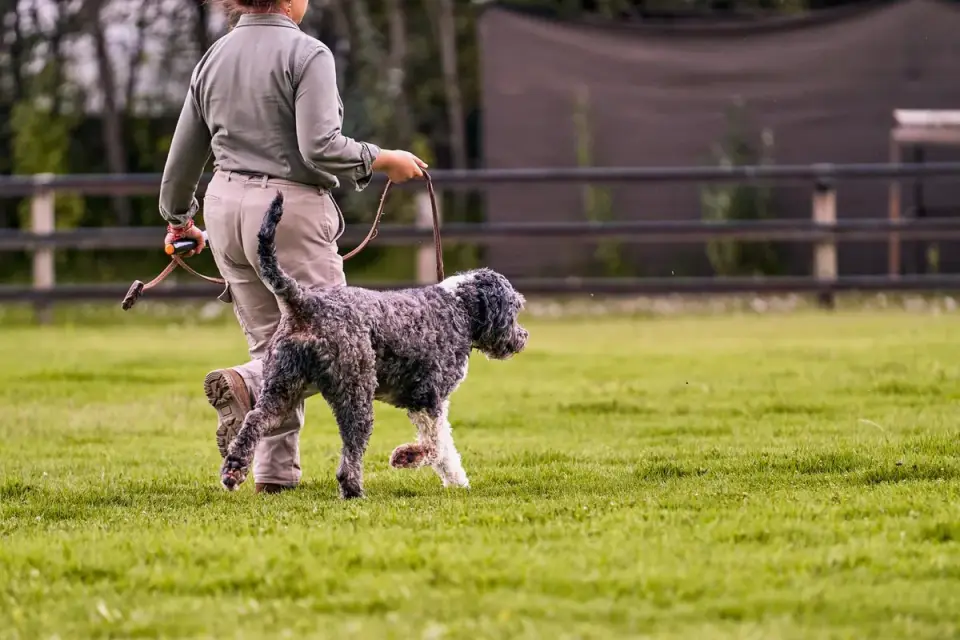
It’s tempting to let a stiff dog simply rest more. In practice, joints that move less tend to stiffen faster. Short, frequent, flat walks — five to fifteen minutes, several times a day — tend to outperform one long weekend hike. Swimming and controlled leash work on grass are gentler than pavement or stairs. Watch how your dog moves the next morning; that’s your feedback loop.
Vet-Guided Pain Control
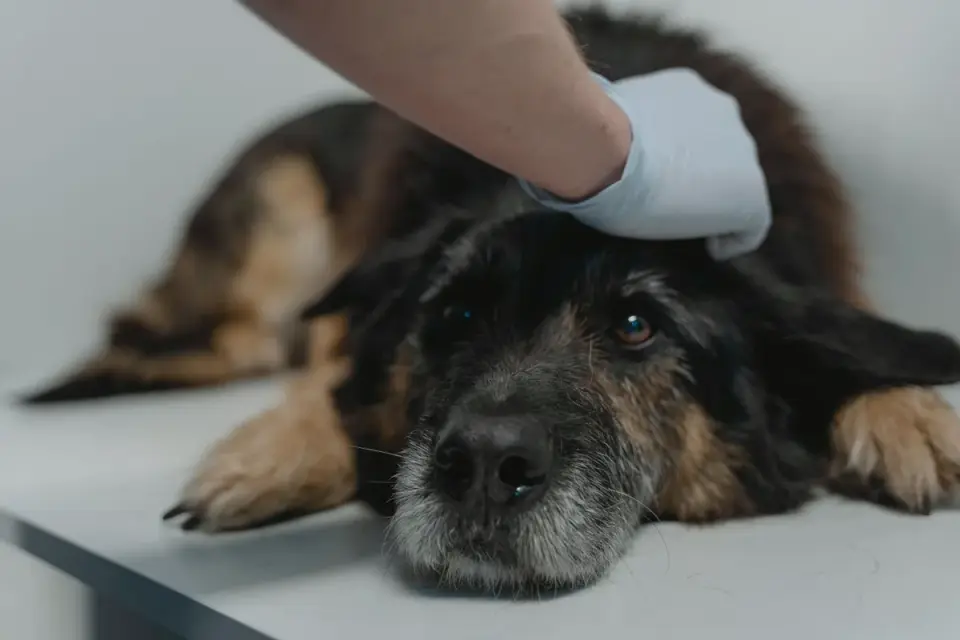
A dog in pain moves less, and moving less accelerates stiffness — it’s a loop worth breaking early rather than late. Veterinary options range from NSAIDs to newer injectable therapies to physical rehab modalities like therapeutic laser or hydrotherapy. None of these should be self-prescribed; dosing and drug interactions matter, especially in older dogs with kidney or liver changes already in progress.
Joint-Supportive Nutrition
This is where supplements sit — as one layer among several, not a stand-in for the other three. Glucosamine and chondroitin are among the most studied joint support ingredients for dogs, and each has a distinct evidence base. Chondroitin has been studied for how it supports healthy synovial fluid homeostasis, per research published in Frontiers in Veterinary Science. Glucosamine HCl has shown, in review-level evidence, the ability to help prevent experimentally induced cartilage degradation in vitro, according to the Journal of Veterinary Medical Science. Green-lipped mussel powder has a different, complementary profile: in vitro work published in Nutrients found that mussel-derived compounds alleviated paw swelling in rats and reduced serum markers of inflammation, including rheumatoid factor and pro-inflammatory cytokines. That’s inflammation-pathway evidence, distinct from the cartilage-structure evidence behind glucosamine and chondroitin — which is exactly why formulas often combine the two categories rather than leaning on one ingredient alone.
If you want to see how real joint formulas stack up against each other on dose and testing, our best joint supplement for dogs comparison scores five of them side by side.
Reading Your Dog’s Pattern
Stiffness that’s worst first thing in the morning and eases with movement reads differently than stiffness that gets worse as the day goes on, or that shows up suddenly on one leg. Keep a loose log for two weeks: which limb, what time of day, how long it lasts, and what makes it better or worse. That log is more useful at your next vet visit than a vague “he seems stiffer lately.”
When to Call Your Vet, Not Just Wait It Out
Sudden-onset lameness, a dog that won’t bear weight at all, or stiffness paired with appetite loss or lethargy isn’t a wait-and-see situation. Chronic, slow-onset stiffness in an older dog is still worth a veterinary workup before you build a home plan around it, since osteoarthritis, hip dysplasia, and disc disease can look similar from the couch but need different management.
Gut health also plays a supporting role here, mostly indirectly: dogs on long-term joint or pain management sometimes need a gentler digestive foundation, which is part of why some owners pair a joint routine with a human-grade probiotic blend — not as a joint treatment, but as general digestive support alongside it.
Where This Goes From Here
The dogs who age into stiff joints most gracefully aren’t the ones on the most expensive supplement. They’re the ones whose owners kept weight in check, kept movement consistent even on bad days, brought pain under control early with their vet instead of waiting it out, and treated nutrition as one supporting layer rather than the whole plan. Build in that order, and the rest gets easier to manage as your dog keeps aging.
Frequently asked questions
Is stiffness always arthritis in an old dog?
Not always. Degenerative joint disease is common in senior dogs, but stiffness can also come from a soft-tissue injury, a neurologic issue, or simple deconditioning after a slow week indoors. A veterinary exam, sometimes with imaging, is the only way to know which pattern you're dealing with.
How much exercise is too much for a stiff, older dog?
Less about volume, more about shape. Short, frequent, flat walks generally beat one long outing, and any activity that leaves your dog visibly sorer the next morning should be shortened, not repeated at the same length.
Do joint supplements work fast?
Ingredients like glucosamine and chondroitin are typically evaluated over weeks of consistent daily dosing, not days. If you don't see any change in gait or willingness to move after six to eight weeks, that's worth discussing with your vet.
Can I just use human glucosamine tablets?
It's better to use a product formulated and dosed for dogs. Human formulations may include other actives (added sodium, sweeteners, or co-ingredients like acetaminophen combinations) that aren't appropriate for a dog's size or physiology.
Sources
- Chondroitin supplementation and synovial fluid homeostasis in joint health — Frontiers in Veterinary Science
- Glucosamine hydrochloride and experimentally induced cartilage degradation — Journal of Veterinary Medical Science
- Green-lipped mussel extracts and inflammatory markers in joint disease models — Nutrients