Is an NAD+ Booster Safe for Dogs? What to Check Before You Start One
Medically reviewed by Cortney Curtis, DVM — For general education — not a substitute for veterinary care.
An NAD+ booster is generally safe for dogs when dosed appropriately and chosen with veterinary guidance.
On this page
- What “NAD+ booster” means before you buy anything
- Before you start: what to check on the label and with your vet
- The first week: dosing it correctly and watching for reactions
- Weeks two through four: what normal adjustment looks like
- The ongoing picture: what the dog evidence actually shows
- When to stop and call your vet
An NAD+ booster is generally safe for dogs when dosed appropriately and chosen with veterinary guidance. That’s the short answer. The longer answer depends on what’s actually in the product, how you introduce it, and what you watch for over the first month — which is the order this guide follows, start to ongoing use.
What “NAD+ booster” means before you buy anything
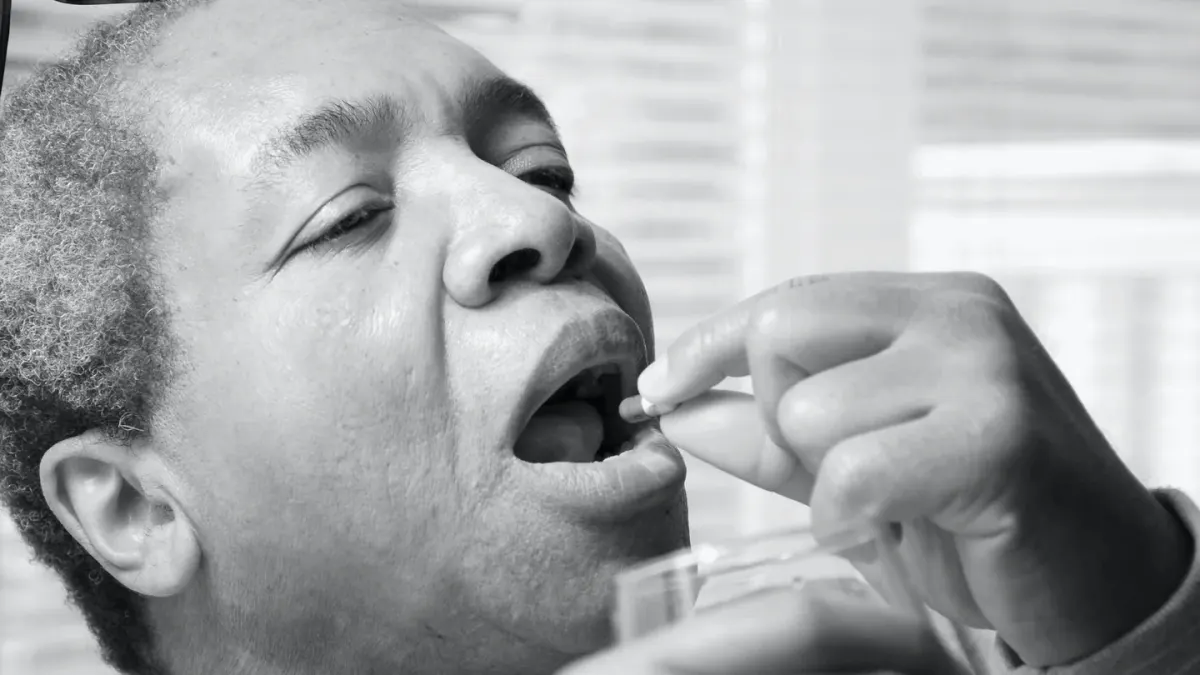
No supplement puts raw NAD+ into a capsule or chew. The molecule doesn’t survive digestion intact, so every legitimate product on the market instead delivers a precursor — most commonly nicotinamide riboside — that a dog’s cells convert into NAD+ on their own. Knowing this matters because it reframes the safety question: you’re not evaluating an exotic compound, you’re evaluating a niacin-family ingredient with a real regulatory history. The NIH Office of Dietary Supplements sets a daily upper limit for niacin from supplements in people, and nicotinamide riboside falls under that same broader ingredient family. That’s a human figure, not a canine one, but it tells you the ingredient class has been scrutinized, not invented for pet marketing. Many formulas also add quercetin or resveratrol alongside the precursor, on the theory that antioxidant support and NAD+ repletion work better together. If you want the deeper mechanism, our explainer on senolytics for dogs covers the senescent-cell side of that pairing.
Before you start: what to check on the label and with your vet
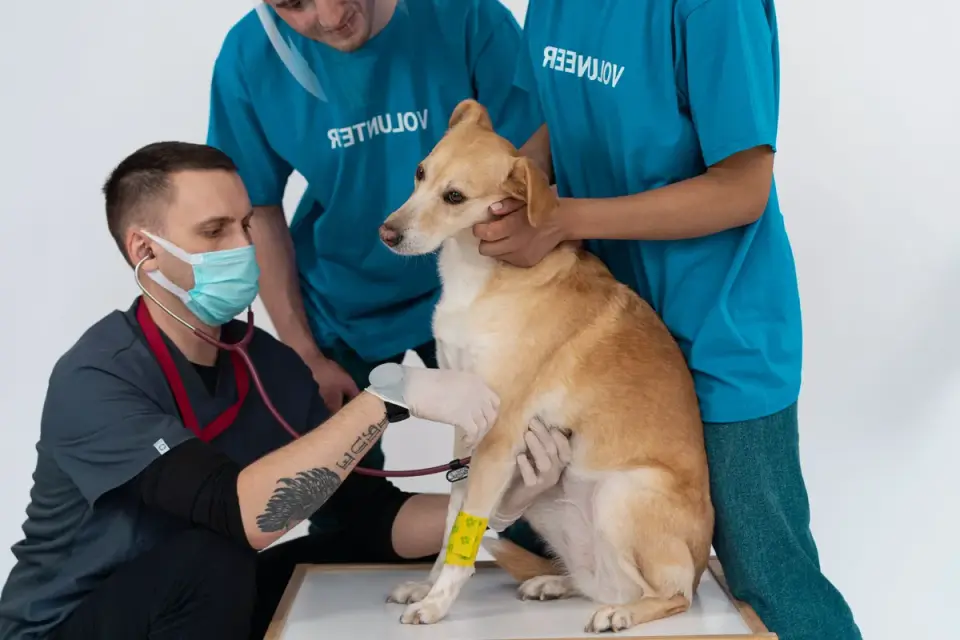
Do this before the first dose, not after. Check that the label states a milligram amount per serving, not just “proprietary blend.” Confirm the precursor form named — nicotinamide riboside is the one with the most published safety data. Call your vet if your dog takes anything metabolized by the liver, since niacin-family compounds are processed there too. Skip products that won’t disclose third-party testing; you can’t verify a dose you can’t see. If your dog is a large or giant breed, don’t assume the label dose scales linearly — check our breakdown on NAD+ dosage for a large dog before you start.
The first week: dosing it correctly and watching for reactions
Start at the labeled serving size. Don’t double it to “speed things up” — more precursor doesn’t mean faster benefit, and it does raise the odds of GI upset. Give it with food for the first several days; that alone resolves most of the mild stomach softness owners report early on. Watch for vomiting, loose stool, or unusual lethargy in the first 48 to 72 hours, since that window is when a true intolerance tends to show up. If nothing unusual happens by day three, you can treat the dose as settled and stop watching quite so closely.
Weeks two through four: what normal adjustment looks like
Most dogs need this stretch before an owner notices anything. Energy and interest in play are the two things people report first, followed by easier stair and couch transitions in older dogs. Resveratrol, when it’s part of the formula, is still being studied mostly outside dogs — one recent lab study in Phytomedicine found that early-life exposure to a resveratrol-related compound sped up development but shortened adult lifespan in a non-mammalian model, which is a reminder that dose and life stage matter even for compounds sold as antioxidants. That finding doesn’t map directly onto an adult dog’s daily dose, but it’s a good argument for staying at label amounts rather than stacking supplements to chase a faster result. If resveratrol specifically is what you’re weighing, our full safety and dosing breakdown is here: is resveratrol safe for dogs?
The ongoing picture: what the dog evidence actually shows
This is where the safety question gets a real answer instead of a guess. A randomized, controlled trial published in Scientific Reports gave senior dogs with mild to moderate cognitive impairment a combination of a senolytic and an NAD+ precursor for three months, with a subset followed to six months, and reported no notable adverse effects alongside improved owner-assessed cognition and reduced signs of frailty. That’s the strongest dog-specific safety signal available right now — a real trial, in dogs, at a stated dose, with a control group. Quercetin’s supporting data is thinner and mostly lab-based rather than canine: a Pharmaceuticals (MDPI) study on quercetin and related compounds found no effect on feeding behavior at the concentrations tested, which is a narrow, early-stage result — useful context, not a canine safety verdict on its own. Treat any single-ingredient claim about quercetin or resveratrol as one input, not the whole picture, and keep expectations tied to what the dog trial actually measured. For the fuller landscape of what’s approved for use in dogs and why, see what longevity supplement vets recommend for senior dogs.
When to stop and call your vet
Stop the supplement and call your vet if you see repeated vomiting, diarrhea that doesn’t resolve in a day, or a sudden drop in appetite or energy. Also call before restarting anything if your dog’s medication list changes — a new prescription can interact with an ingredient that was fine on its own. None of this makes an NAD+ booster risky by default; it makes it a supplement worth handling with the same attention you’d give any new addition to a senior dog’s routine. Start low, watch closely, adjust based on what you actually see, and keep your vet in the loop rather than out of it.
Frequently asked questions
Is an NAD+ booster safe for dogs with existing health conditions?
Talk to your vet first. Dogs on medication for liver, kidney, or seizure conditions need a professional check before adding any new supplement, including an NAD+ precursor.
What's actually in a dog NAD+ booster?
Most formulas use nicotinamide riboside, a precursor the body converts into NAD+, often alongside antioxidants like quercetin or resveratrol rather than raw NAD+.
How fast should I expect to see anything?
Give it at least three to four weeks of consistent daily dosing before judging effect, and track specific behaviors — stairs, wake-up stiffness, play interest — rather than looking for a dramatic change.
Can I give a large-breed dog the same dose as a small dog?
No. Dose should scale to body weight and the product's own per-serving amount; see our guide on NAD+ dosage for a large dog before you split or double servings.
Sources
- Niacin — Health Professional Fact Sheet — NIH Office of Dietary Supplements
- A randomized, controlled clinical trial demonstrates improved owner-assessed cognitive function in senior dogs receiving a senolytic and NAD+ precursor combination — Scientific Reports
- Quercetin and related compounds feeding-behavior study — Pharmaceuticals (MDPI)
- Embryonic exposure and resveratrol lifespan study — Phytomedicine