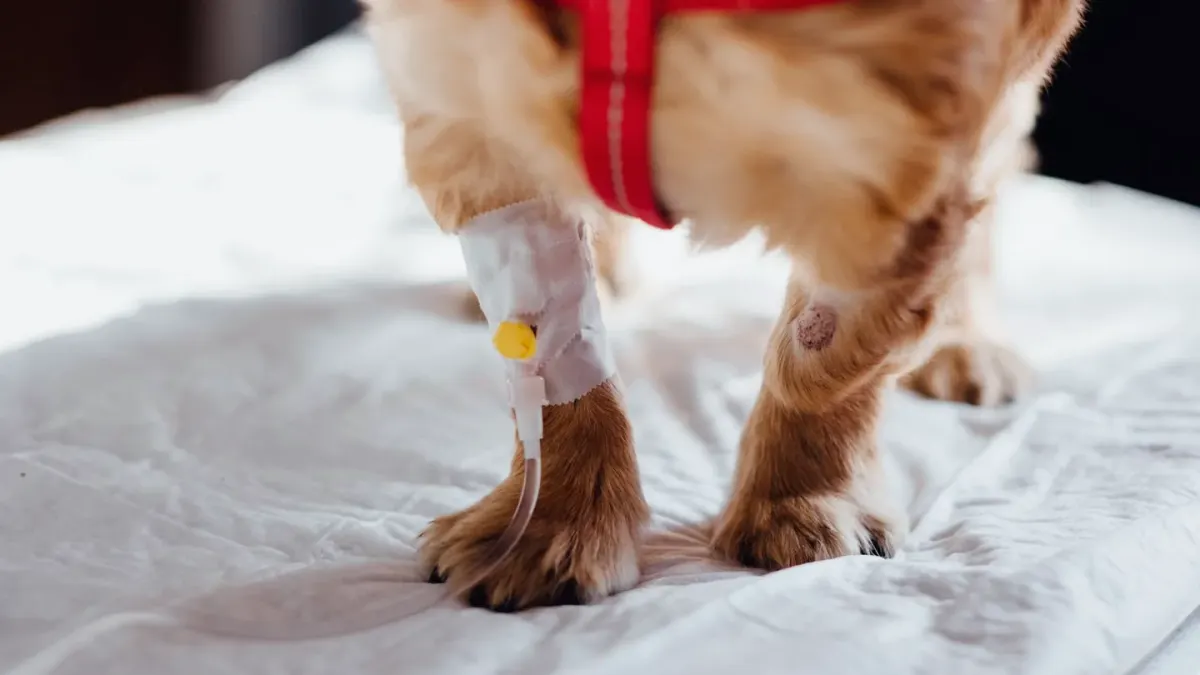
Tina noticed Keaton, her 6-year-old neutered male Pomsky in Orlando, Florida, hesitate at the three porch steps he usually took in one hop, then yelp when she lifted his chest to help. That pause matters more than it looks. In intervertebral disc disease, a disc bulges or bursts against the spinal cord, and hours can separate a painful but mobile dog from one that cannot walk.
The verdict is direct: learn the early IVDD warning signs and call a veterinarian the same day they appear, rather than starting a mobility supplement first. Pain relief, strict rest, imaging, and referral decisions support the cord itself. No chew or powder does that, and waiting to see if a product helps lets inflammation and compression continue.
Why back pain often shows up first
The disc sits like a cushion between vertebrae, with a soft center and a tougher outer ring. With age or breed-related disc degeneration, that center hardens or the ring weakens, so normal jumping, twisting, or even crate rest can push disc material into the spinal canal. The nerves around it signal pain before they lose function.
Owners most often report crying out when picked up, a hunched back, a tucked belly, reluctance to jump, climb stairs, or go for a full walk, and stiffness after rest. VCA Hospitals describes reluctance to jump, pain and weakness in the hind limbs, crying out, anxiety, and reduced activity as common presentations, with severity ranging from mild pain to paralysis.
The mouth offers a useful comparison here. In periodontal disease, plaque drives quiet inflammation long before a tooth loosens, and the body carries that inflammatory burden beyond the mouth. The spine works in a similar way: early pain is the visible part of tissue injury and local inflammation around nerves. That oral-systemic link supports general health habits like daily dental care, but it does not mean dental care treats a disc. Saying it did would outrun the periodontal data.
Strict rest starts now.
That single sentence is the bridge between noticing and doing. Carry a painful small dog with one hand under the chest and one under the hindquarters, keep the back level, block stairs and furniture jumps, use a short leash for bathroom trips only, and call the clinic.
7 early signs worth a same-day vet call
1. Yelping, whining, or flinching when touched. A sharp cry when lifted under the chest, when the neck is turned for a collar, or when petted along the back points to spinal pain rather than a sore leg.
2. Hunched posture or tight belly. A roached back, tucked abdomen, or head held low and stiff suggests the dog is guarding the neck or back.
3. Reluctance to jump, climb, or play. Keaton’s three-step hesitation is classic. A dog that suddenly needs coaxing for the couch, car, or porch steps is reporting pain.
4. Stiff, short steps or a wobbly rear. Watch from behind on a straight, flat 20-foot walk. Crossing over, scuffing nails, swaying, or sitting down mid-walk can mean nerve signals to the hind limbs are fading.
5. Head and neck changes. Neck-disc dogs may hold the nose low, refuse to lower the head to the bowl, walk with short choppy front steps, or yelp when looking up for a treat.
6. Changes in activity, appetite, or housetraining. Restlessness at night, panting, trembling, eating less, or urinating in the house without posturing can follow pain or early nerve dysfunction, not disobedience.
7. Dragging, knuckling, or inability to stand. Toes that fold under, nails scraping concrete, or hind legs that splay are urgent. Loss of deep pain sensation is an emergency, and the American College of Veterinary Surgeons notes that severe disc herniations can progress from pain to weakness to paralysis and loss of bladder control.
Darla, an 11-year-old spayed female Akita in North Las Vegas, shows the other end of the spectrum. When an older, 78-pound dog starts lying down 50 feet into a routine walk and needs help rising, owners often blame age. Vets often see that attribution delay care for both arthritis and disc disease, which is why a new mobility change lasting more than 24 hours deserves an exam rather than a new supplement.

What a vet visit clarifies that a supplement cannot
A veterinarian grades the episode: pain only, mild weakness that still walks, non-ambulatory weakness, or paralysis with or without deep pain. That grade guides crate rest and medication, X-rays to rule out other causes, and whether advanced imaging and surgical referral are needed. Keeping a short log helps: date the first yelp, count the stairs refused, measure the walking distance before sitting, and note any dragging or incontinence.
This is also where evidence boundaries matter. I prefer supports over treats, and joint ingredients are best judged by what the label actually discloses. If you later discuss mobility nutrition, resources like Senior Dog Vitamins: What the Checklist Should Look Like Before You Buy and Chondroitin Dosage for Dogs: What the Label Should Say and What It Often Doesn’t explain how to read doses and formats without promising disease effects. For a framework on evaluating any product claim, see Are Boops Pets Supplements Worth It? How to Actually Judge Any Dog Supplement.
What would change this recommendation? A randomized, blinded trial showing that a specific oral supplement preserves motor function or reduces need for medical or surgical care in dogs with imaging-confirmed IVDD. No such periodontal or joint-supplement data currently meets that bar, which is why early confinement and veterinary assessment remain the priority.
Call now if there is paralysis, repeated falling, inability to urinate, uncontrolled pain, or rapid worsening over hours. Bring a list of medications, keep the dog confined on a non-slip surface during transport, and do not attempt spinal manipulation at home.
Frequently asked questions
What is the earliest sign of IVDD in dogs?
Sudden back or neck pain is often first — yelping when lifted, a hunched back, or refusing stairs and jumps. Any new wobbliness, toe dragging, or incontinence needs same-day veterinary assessment.
Can IVDD come on suddenly?
Yes. Disc material can herniate during ordinary activity and progress from pain to weakness within hours, so new crying, stiffness, or hind-limb weakness should not wait for a supplement trial.
Should I give a joint supplement while waiting for the vet visit?
Do not delay care to try a supplement. Keep the dog rested and confined, avoid stairs and jumping, and ask the veterinarian what medical management and activity limits fit the neurologic grade.
Sources
- Intervertebral Disc Disease — American College of Veterinary Surgeons