On this page
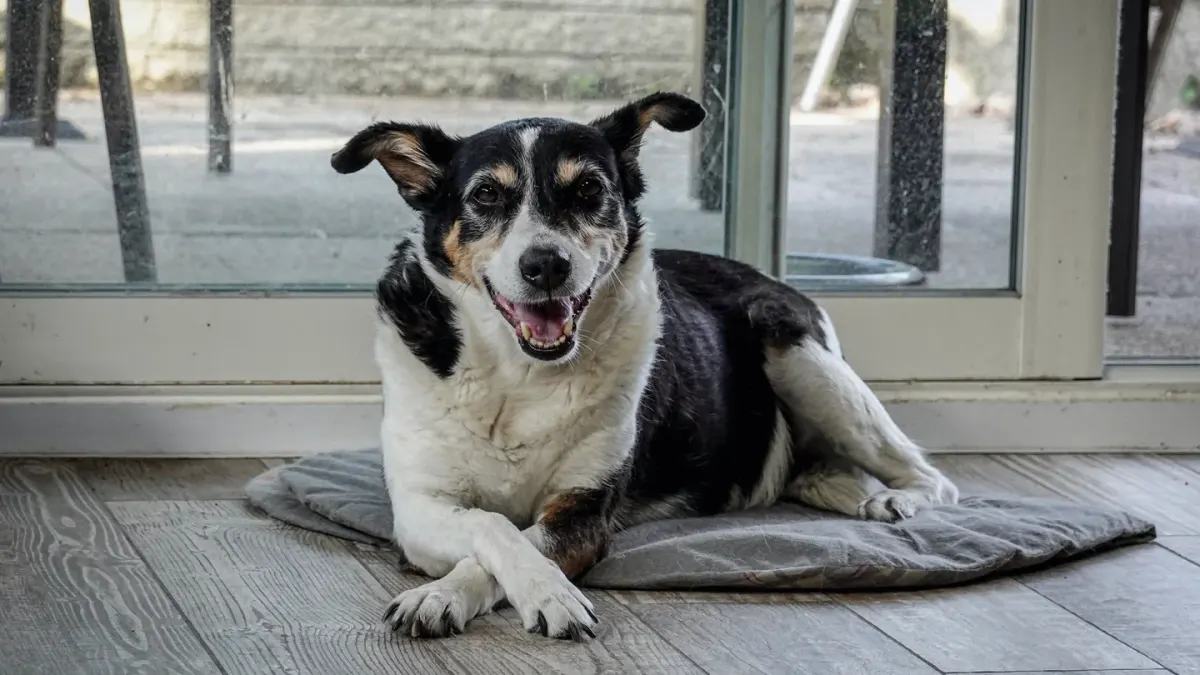
A twelve-year-old Labrador named in my notes only as “the yellow dog on Maple Street” came in for a limp. That was the appointment. The limp was real — a touch of hip arthritis, manageable with the usual plan. But halfway through the exam, almost as an aside, the owner mentioned that he’d started pacing at 2 a.m. and had twice walked into the closet looking, apparently, for the door. At 71 pounds and eleven years and nine months old, he wasn’t disoriented enough to worry anyone. He was just “getting old.” I want to start there, because that sentence — he’s just getting old — is where early cognitive decline hides.
My verdict up front: if a senior dog shows even one DISHA sign — disorientation, social withdrawal, disrupted sleep, house-training lapses, or a shift in activity — for more than two weeks, that’s worth a veterinary workup, not a wait-and-see. The signs are subtle by design; canine cognitive dysfunction progresses slowly enough that owners normalize it in real time. I write from the exam table outward on this one, and the table tells you more than the internet ever will: a dog with early cognitive change often has a stiff spine, sore hips, or dulled vision sitting right alongside the behavioral shift, and separating “brain” from “body” is exactly the job.
What the signs actually look like, versus what they get mistaken for
Veterinary behaviorists use the acronym DISHA (sometimes DISHAA) to organize the clinical picture: Disorientation, altered Social interaction, disrupted Sleep-wake cycles, House-training loss, and changed Activity level, with Anxiety sometimes tacked on as a sixth axis. The AAHA senior care guidelines describe daytime sleeping paired with nighttime restlessness, decreased interaction with family, disorientation inside a familiar home, and new anxiety as the most common presenting signs — and that combination is the tell. A dog who sleeps more because his knees hurt is different from a dog who sleeps all day and then paces the hallway at midnight.
Here’s the part that trips owners up, and honestly some general practitioners too: early cognitive decline mimics normal aging almost perfectly. A dog staring at a wall for thirty seconds, a dog who’s slower to greet you at the door, a dog who naps more — every one of those is also just what an old dog does. The AKC Canine Health Foundation puts it plainly: early changes often mirror normal aging, arthritis, or sensory loss, which is exactly why they get missed until the disease is well established. I’d add one more wrinkle from the exam room: pain changes behavior too, and it changes it in overlapping ways. A dog with lumbosacral pain may resist jumping on the bed for entirely orthopedic reasons that have nothing to do with the brain — but a dog with both pain and cognitive change will show a messier, harder-to-parse picture than either alone.
Why this isn’t just a memory problem
A published analysis of medical conditions alongside cognitive scores found that dogs with more musculoskeletal and neurological signs — pain, weakness, sensory decline — also scored worse on cognitive measures, according to research published in PMC. That matters clinically. It means a full workup for suspected cognitive decline has to include a real orthopedic and neurologic exam, not just a behavior questionnaire. I check gait, spinal range of motion, and proprioception before I ever commit to a cognitive diagnosis, because a dog whose “confusion” is actually vestibular disease, or whose “withdrawal” is actually pain-guarding, needs a completely different plan.
This is where a second scenario is useful, because the first one made the decision sound simpler than it is. A nine-year-old Border Collie mix, 42 pounds, came in three weeks after her owner started an over-the-counter “brain support” chew on a friend’s recommendation. The owner was frustrated: no change in the pacing, and now she’d also missed two follow-up visits for a persistent cough that turned out to be early congestive heart failure. The supplement wasn’t the problem, but it had become a distraction — a stand-in for a diagnosis that was never actually made. By the time we ran bloodwork and a chest film, her disorientation was better explained by hypoxia and poor sleep from labored breathing than by primary cognitive dysfunction. Supplements aren’t harmful reflexes on their own, but reaching for one before ruling out a treatable medical cause is a failed approach I see often enough to name directly.
The formal diagnostic picture is evolving quickly. In 2025, a working group of veterinary specialists issued the first consensus guidelines for diagnosing and monitoring canine cognitive dysfunction syndrome, published through the Journal of the American Veterinary Medical Association. That’s a meaningful shift. For years this was a diagnosis of exclusion, made mostly by ruling everything else out; formal criteria should make earlier, more consistent detection possible, especially in general practice where cognitive change is still underdiagnosed relative to how common it is.
The edge case that changes how you apply all of this
Not every early sign points the direction you’d expect, and I want to flag one edge case that catches even careful owners off guard. A fourteen-year-old Chihuahua, barely 9 pounds, was brought in because she’d “gotten clingier” — following her owner room to room, whining if left alone even briefly, by day 10 refusing to settle in her usual bed. Clinginess reads as emotional, almost sweet, and owners often frame it as their dog “just wanting to be close” in old age. But increased attachment and separation-type anxiety are themselves listed among the DISHA social-interaction changes, not a benign quirk of aging. In a dog that small, subtle sensory loss — dimming vision, reduced hearing — can also drive that clinginess directly: she can’t track her owner by sight or sound the way she used to, so she tracks by proximity instead. The lesson isn’t that clinginess always means cognitive decline. It’s that “positive” behavioral changes deserve the same scrutiny as obviously troubling ones, because the underlying driver — sensory loss, anxiety, or true cognitive change — determines what actually helps.
What I actually tell owners in the room
I don’t hand out a diagnosis based on one odd night of pacing, and you shouldn’t accept one either. What I look for is a pattern across at least two DISHA categories, sustained for more than two weeks, without an obvious alternate explanation like a new medication, a household change, or an untreated pain source. If that pattern is present, the workup should include bloodwork, a thyroid panel in the right age and breed, and a full musculoskeletal and neurologic exam before anyone reaches for a cognitive-specific treatment plan. Nutritional and supplement strategies — things like DHA-rich fish oil or antioxidant blends — get discussed constantly in this space, and there’s real interest in ingredients like resveratrol and quercetin for cellular and antioxidant support in aging animals generally, but none of that replaces a diagnosis. For readers who want to go deeper on the supplement side once a diagnosis is in hand, our guides on supplements for senior dog cognitive support, canine cognitive dysfunction supplements, and fish oil DHA for cognitive support on daily walks go into the evidence ingredient by ingredient. If your dog is a giant breed, the aging clock runs differently, too — see when a giant-breed dog is considered senior for how that shifts the timeline.
The counterargument I take seriously is that formal diagnosis takes time and money many owners don’t have, and that a trial of enrichment, better sleep hygiene, and an antioxidant-supported diet is reasonable while waiting for a full workup. I don’t disagree with trying supportive measures early. I disagree with stopping there. A dog whose “cognitive decline” is actually a brain tumor, uncontrolled pain, or early heart disease loses real time every week that gets spent on an unconfirmed assumption.
Bottom line: early cognitive decline in dogs rarely announces itself — it shows up as small, explainable-sounding changes that only look obvious in hindsight. Treat any new DISHA-pattern change in a senior dog as a reason for an exam, not a shrug. Supportive strategies may help support comfort and quality of life alongside a real diagnosis, but they’re not a substitute for one, and I’d rather set that expectation now than let an owner discover it three months into a chew bag that was never going to do the diagnostic work in the first place.
Frequently asked questions
What is the very first sign of cognitive decline in dogs?
There's no single universal first sign, but disrupted sleep — daytime sleeping paired with nighttime restlessness or pacing — and mild disorientation in a familiar space are among the earliest and most commonly reported changes.
Can arthritis or pain look like cognitive decline?
Yes. Pain can reduce activity, disrupt sleep, and cause withdrawal that closely mimics cognitive signs, which is why a full musculoskeletal exam belongs in any cognitive workup.
At what age should I start watching for these signs?
Most guidance focuses on dogs from about 8 years onward, though smaller breeds age more slowly and giant breeds can show senior-pattern changes earlier.
Sources
- Managing Cognitive Dysfunction and Behavioral Anxiety — AAHA
- Aging Dog Dementia — AKC Canine Health Foundation
- The Relationship between Signs of Medical Conditions and Cognitive Decline in Senior Dogs — PMC
- The Canine Cognitive Dysfunction Syndrome Working Group guidelines for diagnosis and monitoring of canine cognitive dysfunction syndrome — Journal of the American Veterinary Medical Association