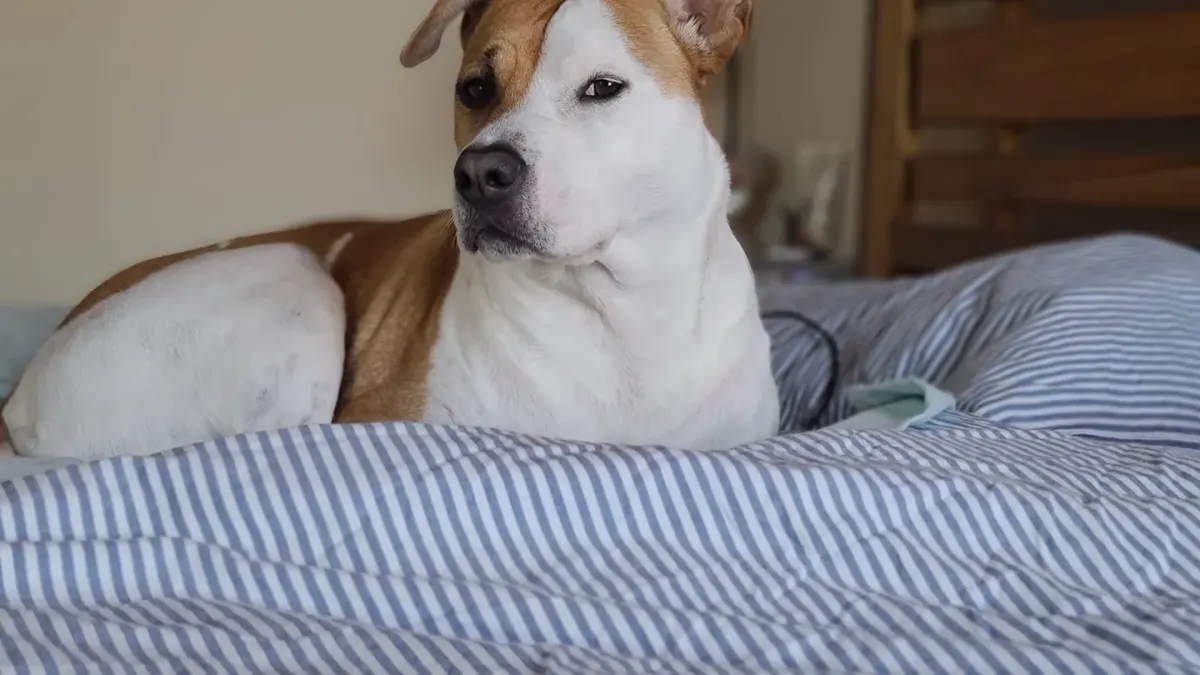
The hallway smells like cleaning spray and someone else’s dinner, the elevator dings, and a nine-year-old 34-pound beagle mix plants his feet outside room 214 and will not cross the threshold. His family is tired from the drive, the bedspread is strange, voices move through the walls, and every sound makes his head lift. They had brought his soft travel crate, the same one from the bedroom at home, with the unwashed blanket and the chew he always takes to his corner. Once the crate was set against the far wall, covered on three sides and left open with that blanket inside, he sniffed, circled, and lay down with a long sigh. By day 2 that small den had become the one place he chose on his own.
My verdict for short stays away from home
Meet the anxious family where they are. Travel is already demanding, and no one needs another rigid protocol. If your dog already rests willingly in a crate at home, bring that same crate to the hotel or Airbnb, set it up as a quiet den, and keep the routine around it boring and predictable. I prioritize a familiar den plus low-demand settling over correcting whining or trying to introduce a new tool on the road. The strongest counterargument is that some anxious dogs panic when confined in a new place, and that concern is valid. Confinement distress is real, which is why the door stays open at first and the crate is an invitation, not a container.
Why a known den steadies the body in a new room
New places keep the threat-detection system on high alert. Unfamiliar odors, footsteps overhead, hallway voices, and broken sleep cues hold sympathetic arousal up, with faster breathing, muscle tension, restlessness, and scanning. A crate the dog already associates with rest narrows that world. Same texture under the body, same dim light, less visual movement, muffled sound, and fewer choices to monitor can help support comfort while the nervous system learns that nothing in this room requires action.
That learning is gradual, not mechanical. Predictability lowers the load. Feeding in the same corner, brief potty walks on the same schedule, white noise, and a covered crate placed away from the door give the brain repeated neutral information. For families already using a chew for travel nerves, it helps to keep expectations modest. A systematic review summarized in Cureus noted that “A systematic review analyzed multiple RCTs and concluded that ashwagandha has a moderate positive impact on stress reduction and cognitive performance.” That finding is general and does not prove the same effect in dogs on travel day.
The middle night often tests the plan. One family with a four-year-old 52-pound pit bull mix told me the first hotel night went smoothly, then the second night fell apart when they closed the crate door because the dog barked at hallway noise. The dog pawed at the door, drooled on the bedding, and would not re-enter for the rest of three weeks in pet-friendly rentals that summer. Closing the door had turned a resting place into a trap. What helped afterward was returning to an open door, moving the crate into the bathroom alcove away from foot traffic, adding a fan for steady sound, and sitting nearby reading for twenty minutes while the dog settled. By day 10 of practicing the same open-door routine at home, she began walking in without a lure.
How to set the crate up so it reads as safe
Place the crate before the dog needs it. Choose the quietest corner, away from the entry door and away from a bed the dog may guard. Keep the home bedding unwashed for the trip so the scent stays continuous. Cover a wire travel crate with a light sheet on three sides, leaving the front open and airy. Put water nearby but not where it will spill inside, offer a long-lasting chew or stuffed toy only in the crate, and keep lighting low in the evening.
Keep departures low key. Practice short absences with the door open, then briefly closed while you remain in the room, then a five-minute step into the hallway. If panting, drooling, escape attempts, or vocalizing escalate when the door closes, stop closing it. A camera can help distinguish protest barking from panic. Panic needs more space and a different plan, not firmer confinement. Related guidance on settling during loud or novel stressors is covered in Dog Noise Anxiety: What Actually Helps When Your Dog Panics at Loud Sounds and in the broader overview Dog Anxiety Supplements: What the Evidence Actually Supports.
Calming ingredients come up often in this setting, and here language matters. A review summarized in MDPI cautions that “For the remaining species, evidence is derived mainly from preclinical studies or traditional use.” In plain terms, much of the botanical story outside people comes from laboratory or traditional-use context rather than strong dog trials. L-theanine has a similar limit. The human literature reviewed in Molecular Psychiatry notes “except for one study on psychotic anxiety (SMD = 0.54; 400 mg/day for 8 weeks)”, which is a narrow human dose finding that should not be read as a travel dose for dogs. If a family already uses a familiar chew, I treat it as possible background support for a rehearsed routine, never as the reason to skip rehearsal or to confine a distressed dog.
An edge case changes the calculus. A senior eleven-year-old 18-pound shih tzu mix with night waking and stiff joints did beautifully with the crate door removed entirely during an Airbnb stay. She could not step over the threshold comfortably, and the enclosed shape trapped warm air. With the door off, a low-sided bed inside the crate frame, a nightlight, and the crate beside the owner’s bed, she slept from midnight to 5 a.m. by the third night, where before she had paced and licked her paws until 2 a.m. For older or claustrophobic dogs, the frame can still mark a den without acting as a box.
Keep the stay simple, leave the crate open until rest is reliable, and let comfort and quality of life guide each small adjustment.
Frequently asked questions
Should the crate door be closed at night in a hotel?
Only if the dog already rests calmly with the door closed at home. Start open, stay in the room, and close it briefly only when settling stays easy.
What if my dog pants or paws at the crate in the rental?
Open the door, move the crate to a quieter spot, and simplify the evening. Ongoing escape behavior, drooling, or panic vocalizing means the dog needs more space and a different plan.
Does a calming chew replace crate training for travel?
No. Routine, scent familiarity, and low-demand settling do most of the work. Any chew is secondary background support discussed with your veterinarian.