
On this page
July 4th at 8 p.m., the first bottle rocket cracked over the fence line and a 5-year-old 58-pound pit mix went from sniffing the gate to throwing his chest against it, panting, drooling, pupils wide, circling the cedar planks as if looking for a seam only he could hear. His owner stood on the patio with a leash in one hand and a phone flashlight in the other, torn between chasing, scolding, and freezing while the next volley popped closer and the dog started digging at the gate latch with both forepaws. That choice — secure the body first or try to soothe the mind while he is still loose — is the decision that decides whether this night ends on the couch or at the shelter.
The verdict: containment first, calming as one plan
Bring the dog inside before dusk, on leash, to a closed interior room, then run all four pillars together — acupuncture pressure, Chinese herbs and calming nutrients, small food-therapy support, and Tui-na bodywork beside plain Western structure and function for nerves and digestion.
The strongest counterargument is to rely on a single heavy sedative or a single chew and skip the setup. I still land on the layered plan because no single ingredient has canine fireworks-escape evidence, and escape is a management failure first, a physiology problem second.
Do not leave a fireworks-phobic dog alone in the yard. Ever.
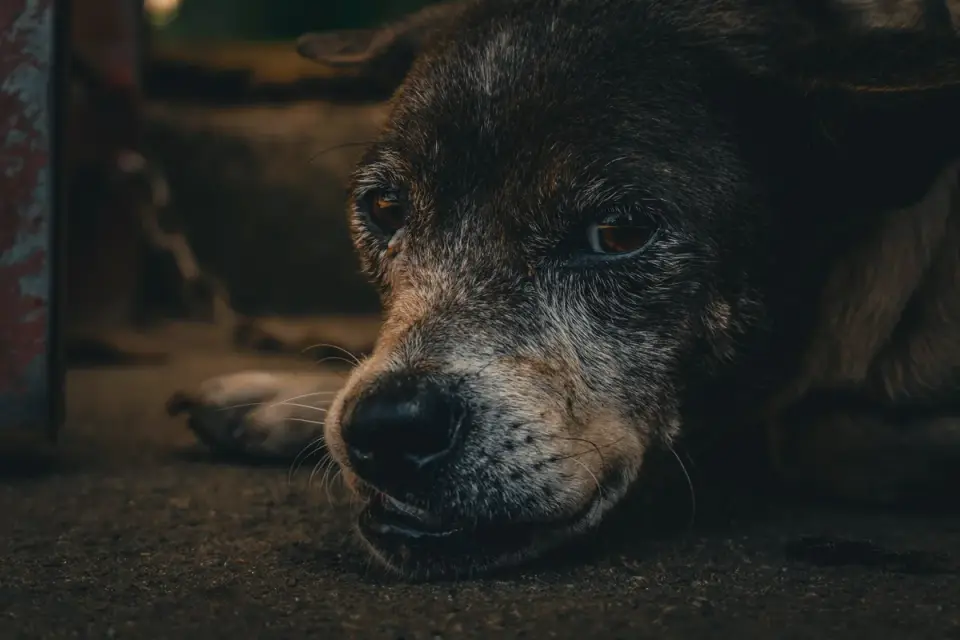
Why does noise turn a steady dog into an escape artist?
Mechanism first. Sudden blast noise triggers the sympathetic surge — adrenaline, cortisol, heart rate up, gut motility up, auditory startle amplified in a species that hears to 65 kHz. In TCVM pattern language, that is Heart Shen disturbance with Liver Qi stagnation turning to wind: restlessness, pacing, panting, clinginess or frantic flight, trembling, drooling, house-soiling, chewing gates.
Western structure/function says the same thing in different words: over-aroused amygdala, poor habituation to unpredictable sound, and learned flight that was rewarded once when running made the noise fade. That is why punishment fails here. The dog is not disobedient; his escape circuit may help support survival in his perception.
From a food-therapy view, a dog that has paced and panted for an hour is depleted — thirsty, warm, gut unsettled. Acupuncture theory would say the Shen has no ground to settle on. The plan has to cool, anchor, and contain at once.
What should you do in the 30 minutes before fireworks start?
Potty on leash, then inside. Check collar, ID tag, microchip record, and a slip lead by the door. Close dog doors, lock gates from the inside, cover windows, run white noise or low classical, set up an interior bathroom or crate with the door open if he likes it — never locked without a practiced routine.
Pair that with hands-on work. Gentle Tui-na along the back — slow palm strokes from neck to sacrum — plus sustained pressure at Heart 7 on the outer wrist crease and An Shen behind the ear, may help support calm contact without restraint. Keep sessions short. If he moves away, let him move within the room.
For background on layering sound, shelter, and touch, see How to Calm a Dog During Thunderstorms: The Layered Approach That Actually Holds Up and My Dog Is Anxious During Thunderstorms: What Supplement Actually Helps?.
The second night tells the harder truth. A 3-year-old 24-pound beagle mix had bolted on Friday, spent Saturday at animal control, and came home Sunday with a raw muzzle from chewing chain-link and a new terror of the back door. By day 10 the owner had bought three different chews, tried holding him tight through the pops, then tried crating him alone in the garage with the door shut while she went to watch the show. Each piece alone collapsed — the chew without containment, the hug that accidentally pinned him when he tried to hide, the isolation that amplified the panic — and the beagle learned that the yard predicts fear, which is exactly how a one-night spook becomes a season-long pattern.
What can calming ingredients honestly offer a bolter?
Short answer: background support, not a fence.
L-theanine is an amino acid found in tea that has been studied for its calming properties. That is the honest Western frame — studied for calm, not proven to stop escape in dogs. The human review literature is narrow; one summary notes “except for one study on psychotic anxiety (SMD = 0.54; 400 mg/day for 8 weeks)” in Molecular Psychiatry, which is a human dose and cannot be mapped onto a 40-pound dog trying to climb a fence.
Ashwagandha reads the same way. “A systematic review analyzed multiple RCTs and concluded that ashwagandha has a moderate positive impact on stress reduction and cognitive performance,” reported in Cureus. “Contains KSM-66 Ashwagandha, a clinically studied form of Ashwagandha for stress support.” Studied for stress support in general, not a canine anti-escape dose.
Chamomile and valerian sit in tradition. “Chamomile and Valerian Root have been used in traditional herbal care to support relaxation.” For broader context, “For the remaining species, evidence is derived mainly from preclinical studies or traditional use,” as summarized in Biomedicines. In TCVM terms those are Shen-calming, slightly cooling herbs and foods; in Western terms they may help support relaxation and normal gut comfort during stress. May help support is the ceiling.
For a wider survey of what holds up and what does not, see Dog Anxiety Supplements: What the Evidence Actually Supports and Do Calming Chews for Dogs Actually Work? A Vet Explains the Evidence.
Give any supplement exactly as labeled, well before the noise, with a small bland food-therapy base — warm turkey and pumpkin or congee-style rice — not as a last-minute bribe at the fence.
How do you handle the dog who is already trying to climb?
Do not chase. Crouch sideways, use a happy low voice, open the house door wide, toss high-value food inside. Slip-lead calmly if you can do it without a fight at the gate. Once inside, dim lights, stay neutral, let him choose a hide — closet, tub, under your desk — and sit with him doing Tui-na, not restraint.
Check mouth, nails, and pads for fence injuries. Panting for more than an hour, vomiting, diarrhea with blood, collapse, or frantic self-injury needs same-night veterinary care. Talk to your veterinarian before the holiday about situational anxiolytics for known bolters; do not borrow another dog’s prescription.
The edge case owners miss is the silent house. A 9-year-old 71-pound shepherd mix with stiff hips and early hearing loss looked fine in the yard at 7 p.m., then by three weeks in to storm season he had chewed through a wooden lattice during a daytime test blast while the family was at work. No barking, no whining — just bent slats, bloody gums, and a neighbor’s camera showing him pacing the fence line for 40 minutes before he tried. Old, sore, hard-of-hearing dogs still panic, and arthritis plus fear makes climbing injuries worse, so ground-floor interior confinement with non-slip footing and a water bowl matters as much as any herb.
Plan for next year starting now: desensitization tracks at low volume paired with food, crate and room training in spring, fence audit for climb points and dig gaps, and a written July 4th checklist on the fridge.
Frequently asked questions
Should I punish my dog for trying to escape during fireworks?
No. Escape attempts are fear-driven flight, not disobedience, and punishment increases panic and future bolting.
Will a calming chew keep my dog in the yard alone?
No. No chew replaces a leash, a locked house, and supervision — use supplements only as background support inside.
When should I call the vet on fireworks night?
Call same-night for fence injuries, vomiting or bloody diarrhea, collapse, self-injury, or panic that does not settle within an hour indoors.
Sources
- Chamomile evidence in anxiety and stress: a narrative review — Biomedicines
- Ashwagandha for stress and cognition: systematic review of RCTs — Cureus
- L-theanine and anxiety outcomes across trials — Molecular Psychiatry