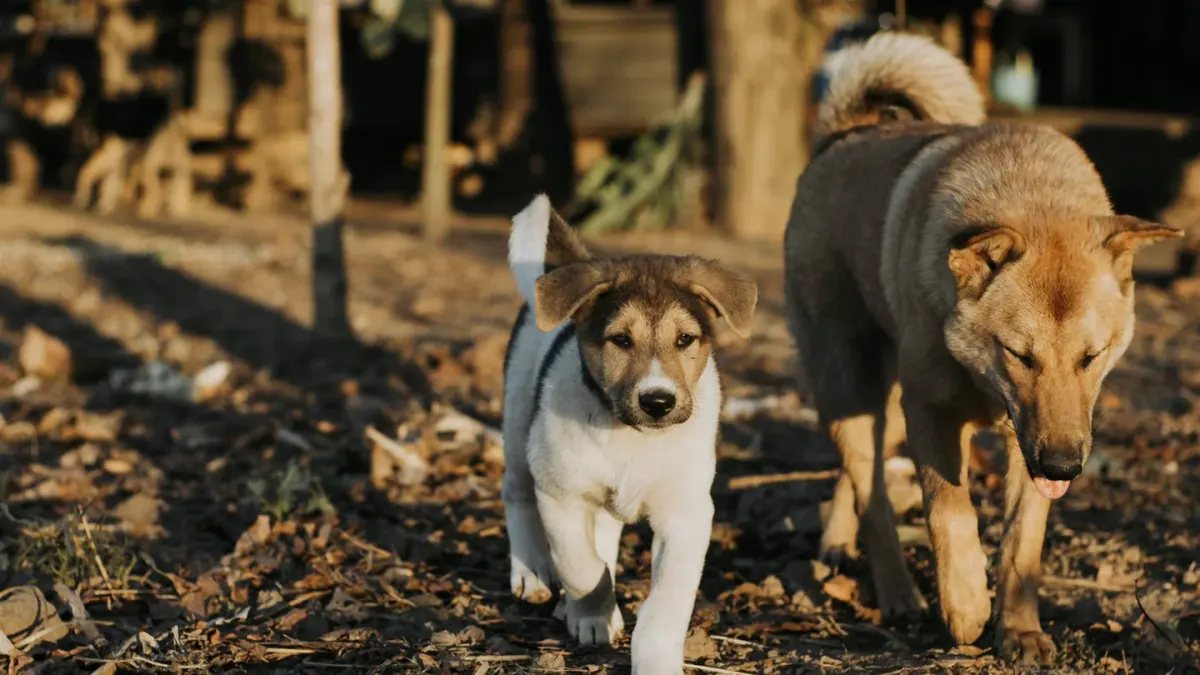
She was an 11-year-old, 68-pound Labrador mix who still whined at the leash, then paid for it afterward. Her owner described the pattern perfectly: bright for the first ten minutes around the block, stiff that evening, worse the next morning, reluctant on the linoleum by day 3 after a long Saturday hike. On exam she had bilateral hip crepitus, quadriceps loss, and a thickened, uncomfortable stifle. The question was not whether she should move — it was which movement would preserve muscle without flaring the joint, and how the stress response around pain was already working against her.
My verdict-first answer for the best low-impact exercise for dogs with arthritis is controlled, flat leash walking in short frequent bouts, with swimming or underwater treadmill as a second tool when you can access it. Walking wins on consistency, joint loading, and metabolic payoff, while water work helps when weight or pain limits land time.
Differential-first, the stiffness you see is rarely joint alone. Arthritis pain activates the hypothalamic-pituitary-adrenal feedback loop, cortisol rises, sleep fragments, appetite and weight shift, and disuse then accelerates muscle loss around an already unstable joint. Supplements framed as supporting normal function fit here — chondroitin, for example, “supports healthy synovial fluid homeostasis” in recent work reported in Frontiers in Veterinary Science — yet no capsule replaces the mechanical signal that tells muscle to stay.

Why I still start with flat leash walks
Walking is boring, which is why it works. The load is physiologic, the duration is titratable, and you can read the dog in real time. I tell owners to think in minutes and surfaces, not miles: 5 to 10 minutes on grass or packed dirt, twice daily to start, with a warm-up shuffle before any brisk pace.
Through an endocrine lens, that rhythm matters. Predictable low-grade activity improves insulin sensitivity and helps blunt the cortisol-driven muscle catabolism you get with chronic pain and poor sleep, whereas sporadic hard exercise spikes stress hormones and soreness without building supporting muscle. If you want context on how that diagnosis is confirmed before you build a plan, see How Do Vets Diagnose Arthritis in Dogs? A Step-by-Step Look at the Exam.
He was a 9-year-old, 84-pound German Shepherd whose owner tried to be kind by resting him all week and then making it up on Sunday. For three weeks in a row the pattern repeated: a 45-minute trail walk on Sunday, carrying a ball uphill, then non-weight-bearing lameness on the right hind by Sunday night and two days of short, painful steps to urinate. When we cut the single long outing and replaced it with two 10-minute flat walks daily plus ramps instead of stairs, his morning latency to rise shortened by day 10. The failed approach taught the tradeoff clearly. Rest protected the joint for six days while the metabolic axis drifted toward stiffness, then one overload undid it.
Where swimming helps, and where it falls short
The strongest counterargument to my walk-first position is obvious: water unloads the joint, so why is it not automatically best? In the right dog, it is excellent. Dogs with severe obesity, bilateral elbow disease, or post-flare pain that limits even a block often move more freely in chest-deep water, maintain range of motion, and rebuild confidence.
Still, swimming does not load bone and periarticular muscle the way walking does, fit and supervision vary widely, and cold, rough surf or an exhausted retrieve session can flare a dog badly. I use water work as volume without pounding, not as a replacement for the daily mechanical signal. Keep sessions short, use a well-fitted vest and ramp entry, avoid diving and sharp turns, and watch for that delayed next-day stiffness that tells you duration outran conditioning.
Nutrition and weight work sit alongside this axis. Excess adipose is metabolically active, and muscle is your best joint brace, so steady activity plus lean body condition changes lameness more than any single modality. For background on what ingredients can reasonably support versus what they cannot, I point owners to Dog Hip and Joint Supplement: What the Ingredients Can (and Can’t) Do and How to Help an Old Dog With Stiff Joints.
Laboratory context helps keep expectations honest without overstating supplements. Glucosamine work has been described as work that “prevent experimentally induced cartilage degradation in vitro” in research summarized in the Journal of Veterinary Medical Science, which is interesting biology rather than proof of pain relief on a walk. Similarly, green-lipped mussel fractions were reported in Nutrients where “BMO, GMO, and KO all alleviated paw swelling in rats and reduced serum levels of rheumatoid factor (RF), anti-cyclic citrullinated peptide (anti-CCP) antibody, and pro-inflammatory cytokines such as TNF-α and IL-17.” That rat inflammation model does not translate directly to your arthritic Labrador climbing the porch steps.
Strength, footing, and the flare rule
Once flat walks are tolerated, I add home strength in micro-doses: three to five sit-to-stands on carpet, weight shifting on a non-slip mat, cavaletti poles at ankle height, ramps instead of jumping into the car. Two sessions per week is plenty to start.
She was a 13-year-old, 22-pound terrier mix with good spirit and terrible traction. Her owner had bought stairs, joint chews, and a new harness, yet the dog still froze at the kitchen threshold every morning for about 40 seconds before taking a first step. By week two after we added only cheap yoga-mat runners, a raised food bowl to reduce neck flexion, and a 7-minute evening walk at the same hour daily, that freeze shortened and she began seeking the walk herself. The edge case was not more exercise intensity but circadian predictability and footing. For tiny, anxious seniors with concurrent endocrine disease or nighttime cortisol restlessness, sameness soothes the feedback loop more than novelty loads it.
Use a simple flare rule. If lameness lasts more than two hours after exercise, or morning stiffness is worse two days running, you overshot. Cut duration by one-third, keep frequency, change nothing else for a week.
What would change my mind? A dog with uncontrolled pain, neurologic deficits, or acute swelling is not a training problem. That dog needs re-examination, analgesia review, and weight and thyroid/metabolic assessment before progression. Exercise supports normal joint and muscle function; it does not reset structural disease.
Frequently asked questions
How long should I walk my arthritic dog?
Start with 5 to 10 minute flat leash walks twice daily on soft, non-slip surfaces, then add 2 to 3 minutes per walk only if there is no lameness lasting over 2 hours and no worse stiffness the next two mornings.
Is swimming better than walking for arthritis?
Swimming unloads painful joints and can build fitness when walking is limited, but it does not replace the bone and muscle loading of walking. I use short supervised swims as an add-on, not the entire plan, unless pain or weight makes land exercise unsafe.
What are signs we did too much?
Lagging mid-walk, sitting down, increased panting out of proportion, limping that evening, difficulty rising the next morning, or reluctance to start the next walk. If you see that pattern twice, shorten walks by one-third and call your veterinarian if lameness persists over 24 hours.
Sources
- Synovial fluid homeostasis in dogs — Frontiers in Veterinary Science
- Glucosamine and cartilage degradation in vitro — Journal of Veterinary Medical Science
- Marine oil fractions and paw swelling in rats — Nutrients