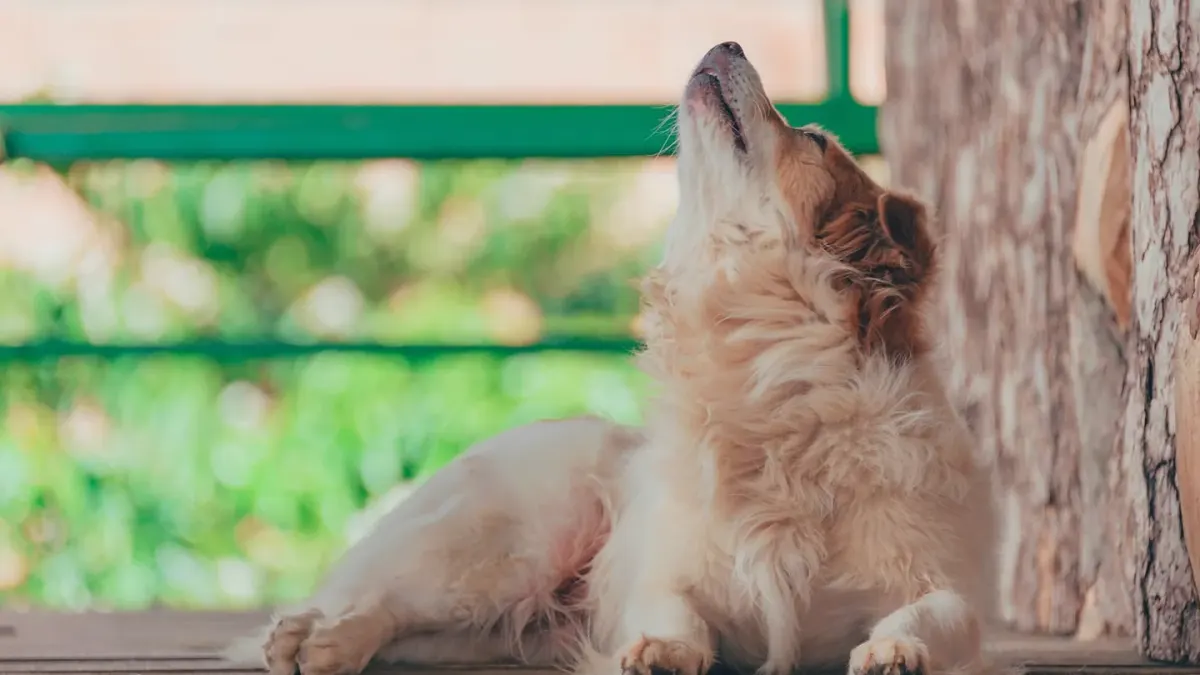
The morning stiffness is the tell. A dog rises, shifts weight off one hind leg, takes three short steps before the stride lengthens, and the owner wonders whether this is old age or something a supplement can influence.
I picture a 9-year-old, 74-pound Labrador mix I followed in rehab who needed a full minute to unfold from his bed each morning. By three weeks in of a steady routine — short leash walks, rugs over slick floors, weight checks, and a consistent joint-support plan — his owner reported he was standing in under 20 seconds and walking to the door without pausing. That change did not come from one herb. It came from supporting the whole joint environment while we watched one measurable marker: time to rise and walk normally. Boswellia serrata fits in that kind of plan, not as a fix, but as one botanical that may help support maintaining comfort during movement.
My verdict is direct: consider Boswellia serrata as a secondary support for a dog with chronic joint stiffness, after weight, exercise, veterinary diagnosis, and better-studied joint ingredients are addressed. It should not replace those foundations.
Why Chronic Stiffness Starts Inside the Joint
Chronic joint inflammation is less about a single swollen joint and more about a joint that no longer moves, lubricates, and recovers efficiently. Cartilage thins, synovial fluid changes in consistency, surrounding muscle weakens from disuse, and the dog unloads the sore leg. That unloading then stiffens the back, neck, and opposite limb.
This is why I walk owners through mobility in structure/function terms. We want to support healthy cartilage matrix, support healthy synovial fluid homeostasis as described in a Frontiers in Veterinary Science study on chondroitin, maintain muscle that stabilizes the joint, and preserve a normal range of motion. Boswellia serrata is traditionally used for comfort and mobility, and laboratory work continues to explore how its boswellic acids interact with inflammatory pathways. The canine clinical data remain limited, so I keep expectations bounded: it may help support maintaining comfortable movement as part of a broader plan.

Where Boswellia Fits — and Where It Does Not Replace Proven Supports
The strongest counterargument to my position is reasonable: why add a botanical with limited dog-specific trials when glucosamine and chondroitin have deeper study histories? That objection has merit.
Glucosamine and chondroitin are among the most studied joint support ingredients for dogs. Experimental work notes that glucosamine may help “prevent experimentally induced cartilage degradation in vitro,” wording reported in the Journal of Veterinary Medical Science. Chondroitin research discusses how it “supports healthy synovial fluid homeostasis.” For green-lipped mussel, a nutritional study in Nutrients found that “BMO, GMO, and KO all alleviated paw swelling in rats and reduced serum levels of rheumatoid factor (RF), anti-cyclic citrullinated peptide (anti-CCP) antibody, and pro-inflammatory cytokines such as TNF-α and IL-17.” Those findings do not translate directly to dogs on a couch, but they explain why I prioritize those ingredients first.
I still land on Boswellia as a conditional add-on because chronic cases often need comfort support from more than one direction. If a senior dog is already lean, moving daily, and taking a well-formulated joint foundation, a veterinarian may consider adding a standardized Boswellia product to help support maintaining ease through the day.
A second picture stays with me because it complicates the recommendation. An 11-year-old, 52-pound pit bull mix with bilateral hip stiffness started a frankincense chew her owner found online while stopping her prescribed walks because “rest seemed kinder.” By day 10 she was stiffer, not looser, and her thigh muscles had visibly softened. We restarted five-minute walks twice daily, added traction mats, and kept supplementation secondary. Within two weeks her evening pacing eased. The lesson was plain: no botanical compensates for lost muscle and joint motion.
How to Use Boswellia Thoughtfully With Your Veterinarian
A short trial with clear criteria works best. Ask your veterinarian whether Boswellia makes sense alongside the current plan, especially if your dog takes nonsteroidal anti-inflammatory drugs, anticoagulants, or has liver disease, gastrointestinal sensitivity, or upcoming surgery.
One edge case changed how I counsel owners. A 6-year-old, 88-pound Rottweiler with intermittent left forelimb lameness seemed like a candidate for added comfort support, yet his stiffness worsened every third week after long weekend hikes. The pattern pointed less to steady chronic inflammation and more to activity spikes plus an undiagnosed elbow lesion, which we confirmed on exam and radiographs. For that dog, measured exercise and diagnosis mattered far more than any supplement change. If lameness shifts legs, worsens rapidly, or follows a strict timeline after exertion, pause the supplement question and pursue an exam first. Readers sorting out next steps can review How Do Vets Diagnose Arthritis in Dogs? A Step-by-Step Look at the Exam and How to Help an Old Dog With Stiff Joints.
Look for a dog-specific product that names Boswellia serrata extract, standardization, lot number, and third-party testing. Avoid human blends with xylitol, concentrated essential oils, or added vitamin D. Give with food, track appetite, stool, and comfort for four to six weeks, and stop and call your veterinarian for vomiting, diarrhea, or reduced appetite.
The practical next step is simple: confirm the diagnosis, protect lean weight and daily motion, secure the studied foundation, then — only with veterinary approval — decide whether Boswellia earns a place as added support for maintaining comfortable movement.
Frequently asked questions
Can Boswellia serrata replace prescription arthritis medication for a dog?
No. It may help support maintaining comfort as part of a broader plan, but it does not replace diagnosis, weight control, exercise, or prescribed medication. Any change should go through your veterinarian.
How long should a trial last before judging whether it helps?
Many clinicians suggest four to six weeks with consistent dosing and daily notes on rise time, walk distance, stairs, and restlessness. If no clear change occurs, revisit the plan with your veterinarian.
What should I look for on a Boswellia label?
A dog-specific formula naming Boswellia serrata extract and standardization, a lot number, feeding directions by weight, and evidence of third-party quality testing. Avoid human products with xylitol or added herbs your veterinarian has not approved.
Sources
- Chondroitin and synovial fluid homeostasis study — Frontiers in Veterinary Science
- Glucosamine and cartilage degradation in vitro review — Journal of Veterinary Medical Science
- Marine oil blends and inflammatory markers in rats — Nutrients