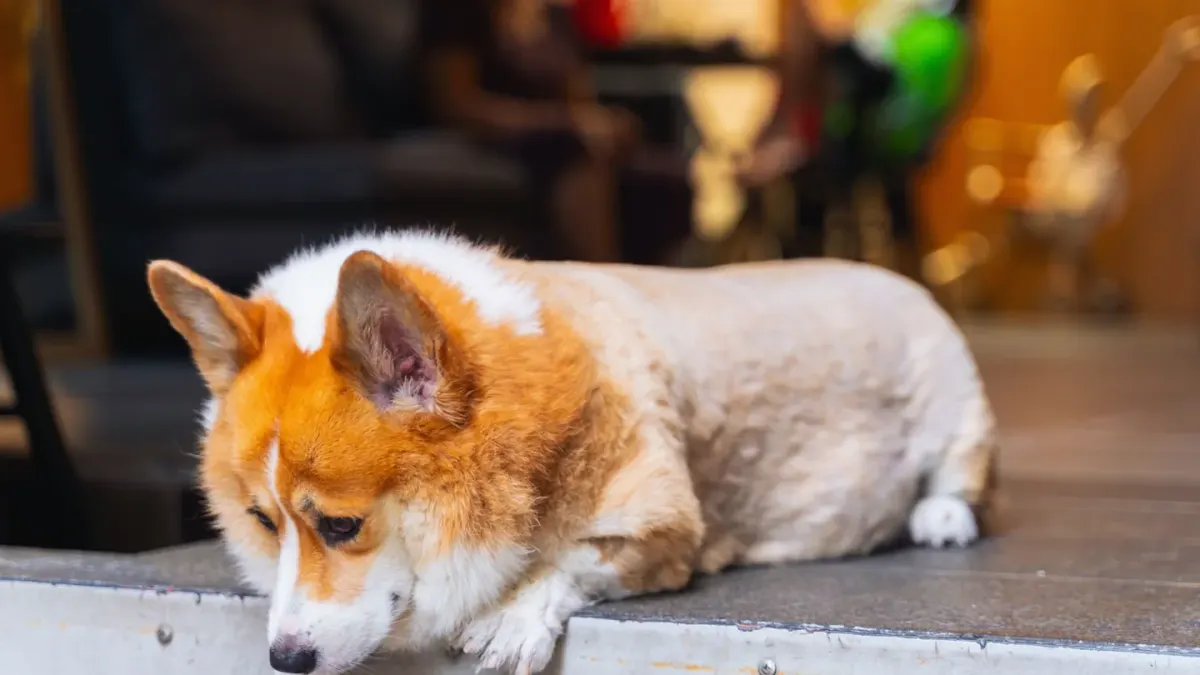
A ten-year-old 74-pound German Shepherd mix hesitates for four seconds before pushing up from the kitchen rug each morning, then shortens his first walk to the end of the driveway and back. His owner, tired of carrying a bottle of glucosamine chews that never seemed to change those first steps, asks whether elk velvet antler could do more for that stiff rise. The question is mechanical at its core: can a powdered antler tissue change how load moves through an arthritic hip, stifle, or elbow, or does it only add cost without changing biomechanics.
My answer: do not buy elk velvet antler as joint support until proven options, weight, and load are addressed first.
Checklist I use before any novel joint powder:
- Confirm the joint diagnosis and which leg and joint limits the rise, turn, or stairs
- Fix load first: body condition, nail length, traction, and daily low-impact movement
- Keep adjunctive support to ingredients with canine data and a labeled dose in milligrams
- Reject velvet antler as a primary plan when the label hides source, processing, or milligrams per chew
- Use any trial only with your veterinarian, with one observable marker tracked for 28 nights
When the rise tells you where load fails
Joints fail mechanically. Cartilage thins, synovial fluid loses viscosity, periarticular muscle weakens, and then cruciate or patellar tracking problems amplify the shear. A supplement positioned as adjunctive support cannot restore fixation or correct conformation. At best it modulates comfort around that altered biomechanics.
That frame matters for elk velvet antler. The product is harvested growing antler, dried and powdered, marketed as containing collagen fragments, glycosaminoglycans, amino acids, and growth factors. Composition varies by elk species, harvest timing, drying method, and which portion of antler is ground. Without standardization, two bags labeled velvet antler are not the same intervention.
The second scene complicates the hope. A five-year-old 42-pound Border Collie with intermittent right hind lameness after agility had already cycled through two online powders, one of them an antler blend, for six weeks with no change in her weave-pole entries. On exam she had bilateral medial patellar laxity and early stifle effusion, and radiographs showed no fixation-worthy cruciate tear but clear load intolerance. Her owner had logged 14 evening walks and noted she sat out the last three sessions entirely. Stopping the blend, trimming 3 pounds under veterinary guidance, and returning to flat leash work did more for push-off than any powder had.
What elk velvet antler actually is
Harvest and processing change the powder
Velvet antler is not shed hard antler chew material. It is vascular growing tissue removed before calcification, then freeze-dried or heat-dried. Heat degrades proteins and peptides quickly. Labels rarely state temperature, elk subspecies, or antler section.
Why joint claims outrun canine data
Human pilot studies and rodent models have tested deer velvet extracts for fatigue, inflammation markers, or cartilage metabolism, but methods are small and inconsistent. I found no well-powered, placebo-controlled trial establishing improved lameness scores, force-plate data, or validated pain scores in dogs with naturally occurring osteoarthritis after elk velvet antler supplementation. Narrative is not evidence, and absence of canine data is the central limit here.
For context on how arthritis is actually diagnosed and staged, the American College of Veterinary Surgeons describes degenerative joint disease as progressive cartilage loss with secondary bony change, which is why exam and imaging must precede any supplement trial. The VCA Hospitals overview of arthritis in dogs makes the same point: management centers on weight control, controlled exercise, and proven analgesia, with nutraceuticals only adjunctive.
What I prioritize instead for load and comfort
Keep the proven base
Weight optimization, daily leash walking on forgiving footing, traction rugs for the rise, physical therapy where available, and veterinarian-prescribed pain control do the mechanical work. Supplements described as adjunctive support sit on top of that base, never in place of it.
Read any joint label like an orthopedist
The U.S. Food and Drug Administration notes that animal supplements and nutraceuticals are not approved as drugs for efficacy, so label transparency is your main quality control. I want species, milligrams per chew for each active, lot number, feeding directions by weight, and third-party testing or a named quality program. “Proprietary joint blend” with no milligrams is a rejection criterion.
For comparison on ingredients that do have canine study history, see Glucosamine vs. Green-Lipped Mussel for Dog Joints: What Each One Actually Does and Dog Hip and Joint Supplement: What the Ingredients Can (and Can’t) Do.
Where the usual plan has to bend
Some dogs cannot tolerate standard exercise progressions. A 13-year-old 18-pound senior terrier with advanced bilateral hip remodeling and a heart murmur could no longer manage the half-mile loop that had kept his hind-limb muscle for years. After his veterinarian adjusted his pain plan, the owner switched to four short 150-yard strolls per day on grass, added a ramp over the two back steps, and tracked nighttime restlessness. Over 28 nights, restless nights fell from 11 to 4, while his morning rise stayed slow. The supplement question became secondary. Load management had to bend around cardiac and orthopedic limits, and comfort improved without any novel powder.
That is the honest boundary. If weight, strength, pain control, and diagnosis are optimized and your veterinarian still wants a defined trial, set one marker, one dose, and one stop date.
If stiffness persists, read How to Help an Old Dog With Stiff Joints and How Do Vets Diagnose Arthritis in Dogs? A Step-by-Step Look at the Exam before adding another product.
So where does elk velvet antler stop winning? At the label and at the literature gap. Without a standardized dose and without canine lameness data, it cannot replace load control, diagnosis, or veterinarian-directed care.
Frequently asked questions
Does elk velvet antler rebuild cartilage in dogs?
No canine trial shows cartilage regrowth or restored joint structure from elk velvet antler. Manage load, muscle, and pain with your veterinarian first.
Is elk velvet antler safe for dogs?
Safety data in dogs are limited and products vary in processing and contaminants. Discuss risks, medications, and quality testing with your veterinarian before any trial.
How long would a trial need to show anything?
Track one observable sign, such as time to rise or distance before lagging, daily for at least 4 weeks with your veterinarian, and stop if there is no clear change.
Sources
- Arthritis in Dogs — VCA Hospitals