
On this page
Most live probiotics do not survive kibble extrusion, so check the after-cook step before you trust the front label. I learned to read a kibble bag backward, starting with the guaranteed analysis and the fine print about colony-forming units at the end of shelf life.
An 8-year-old Beagle mix, 28 pounds, came in for recurrent soft stool after boarding. His owner had bought a kibble advertising “probiotics for digestion” and fed 2 cups split across two meals for 21 days with no change in stool score. We kept his base diet, added a separate room-temperature supplement given with breakfast, and tracked evening walks. By day 10 his stool firmed from a 5 to a 3 on a 5-point chart, and gas during our three-block evening loop eased. The kibble was not bad food, but the live count in the bowl was not doing the work.
My answer first: assume the extruder wins
Set plain expectations before you spend money. Extrusion cooks dough at high temperature and pressure to make it safe, shelf-stable, and crunchy. That same step destroys vegetative Lactobacillus and Bifidobacterium cells.
Treat the aging or sensitive dog as a whole system, not a symptom. A balanced gut microbiome supports overall immune function, but that support only happens if live organisms, or their useful metabolites, actually reach the gut in meaningful numbers.
So do this in order. Read the ingredient list. Find where probiotics appear. Look for CFU per pound or per cup through end of shelf life, not just at manufacture. If the bag lists no strain, no CFU, and no “added after cooking” language, assume the count is near zero by feeding time.
How heat, pressure, and drying cut counts
Extrusion typically runs well above 100°C with moisture, shear, and then drying and cooling. Vegetative probiotics lose viability fast under those conditions.
Spore-forming organisms such as Bacillus coagulans and Bacillus subtilis survive heat far better because the spore coat protects them until conditions improve. That is why you see Bacillus on kibble labels more often than Lactobacillus. Survival is better, but it is still not immunity. Storage heat, oxygen, and 12 to 18 months on a warehouse shelf keep trimming the count.
The NIH Office of Dietary Supplements explains that probiotic effects are strain-specific and dose-dependent, which is why strain names and live numbers matter more than the word probiotic on packaging.
What I look for instead of a front-label claim
Check strain identity first. Look for full names like Bacillus coagulans MTCC 5856 or Bacillus subtilis C-3102, not just “dried fermentation product.”
Check the guarantee. Want CFU/lb or CFU/kg with an end-of-shelf-life promise. “Contains 80 million CFU/lb minimum” tells you something. “Made with probiotics” tells you nothing.
Check placement. Probiotics dusted or sprayed on after extrusion and after drying retain far more viability than anything mixed into pre-extruder dough. Microencapsulation and fat-coating may help support survival, but ask for data.
Store kibble cool and sealed. Once you open a 24-pound bag, heat in a garage and repeated air exposure shorten viability further. Use within 4 to 6 weeks after opening.
If you want background on how pet food is regulated and labeled, the U.S. Food and Drug Administration outlines what must appear on pet food labels and why feeding directions and guarantees matter.
When a separate probiotic made more sense
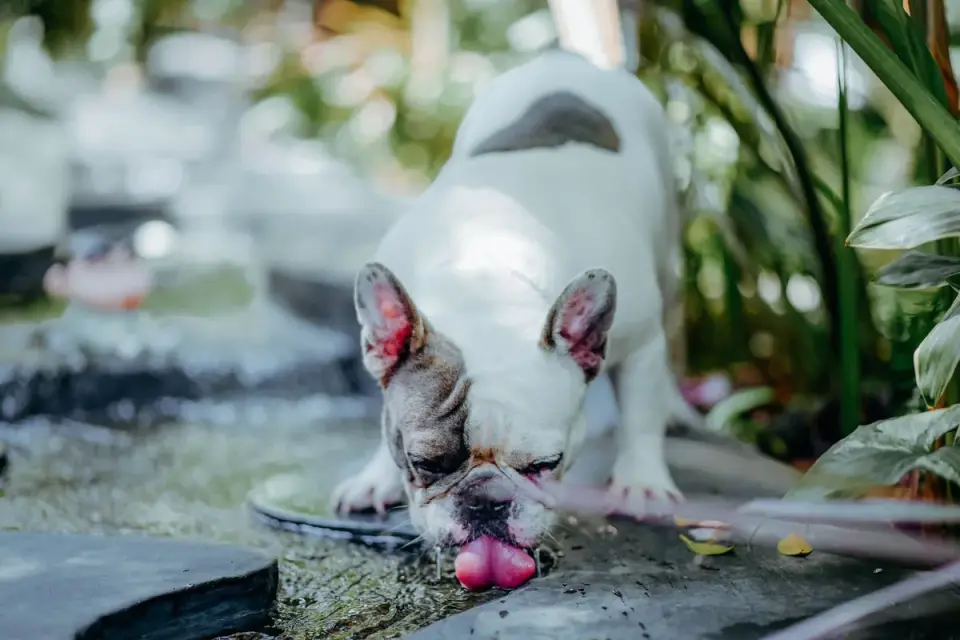
A 4-year-old French Bulldog, 24 pounds, switched to a “probiotic kibble” after two nights of boarding-related loose stool. Her owner fed the new bag exclusively for 14 nights and logged stool each morning. Frequency stayed at three bowel movements per day, urgency did not ease, and the owner felt stuck because she had already paid for a large bag. We kept the kibble she tolerated, paused extra toppers that added fat, and gave a separate spore-forming supplement with her 7 a.m. meal for two weeks. Nighttime accidents dropped from four nights per week to zero, which told us delivery method was the variable, not effort.
That tradeoff repeats. Kibble with in-dough probiotics is convenient. A topper, chew, or powder added at serving is testable. For the sensitive dog, I favor testable.
Learn what a change should look like in the bowl before you judge any product, using What Does Healthy Dog Poop Look Like? A Vet’s Plain-Language Guide and What Does Normal Dog Poop Look Like? A Vet’s Checklist for Color, Shape, and Frequency. If gas is the main complaint, work through Dog Gas Remedy: The Checklist I Use Before Reaching for a Supplement first, because diet change, eating speed, and scavenging often drive odor more than CFU count.
The exception: when kibble is still the right carrier
A 13-year-old Labrador, 71 pounds, with early hind-end stiffness and a history of refusing powders taught me to bend the rule. She ate one measured morning meal and grazed at night, walked only 0.3 miles before tiring, and rejected anything dusted on food after two tries across 6 days. Her owner needed the simplest routine that she would actually swallow. We chose a kibble with an after-extrusion Bacillus guarantee, verified the CFU through best-by date, and kept the bag sealed in a cool pantry. Acceptance stayed at 100% of meals, and we stopped chasing a theoretically stronger product she would not eat.
Use kibble-delivered probiotics when compliance, budget, or a strict prescription diet leaves no room for extras. Then verify the strain, verify post-cook application, and recheck stool after 2 to 3 weeks. If you are also weighing enzymes, read Digestive Enzymes for Dogs: When They’re Medicine and When They’re Just Marketing before stacking products.
What does your bag promise at the end of shelf life, not on the day it was made?
Frequently asked questions
Does extrusion kill all probiotics in kibble?
It kills most non-spore-forming strains mixed into dough before cooking. Spore-forming Bacillus strains added after extrusion and drying retain viability far better, but only if the label guarantees CFU through end of shelf life.
Should I add a separate probiotic on top of probiotic kibble?
If stool, gas, or consistency has not changed after 2 to 3 weeks on the kibble alone, a separate supplement given with meals lets you test dose and strain without changing the base diet. Track stool and frequency before and after.
What matters most on a probiotic kibble label?
Full strain name, CFU per pound or kilogram guaranteed through best-by date, and language showing addition after cooking, such as sprayed on after extrusion. Avoid bags that list only dried fermentation product with no count.
Sources
- Probiotics - Health Professional Fact Sheet — NIH Office of Dietary Supplements
- Pet Food — U.S. Food and Drug Administration