
Cold air has a way of making stiffness visible. A dog who moved well in October starts to hesitate at the door in January, shifts weight after standing, then shortens stride for the first block before loosening up. My verdict-first answer for winter is simple: keep walks shorter, flatter, and more frequent, and warm the body before you ask the joints to work.
That first scene stays with me because the decision was so concrete. An 11-year-old, 64-pound Labrador mix, the kind of senior who still lights up at the leash, had started lagging by the second corner on 28-degree mornings. His owner worried he was losing interest in walks. Inside, on a rug, he would lie with his hind legs tucked hard under him, then rise stiffly and take six or seven careful steps before his gait evened out. Three weeks in, after we moved him to midday outings and added five minutes of indoor movement first, his owner reported he walked the full half-mile loop without sitting down once. The walk had not gotten longer. The preparation had gotten better.
Walk warm, then walk short
Start indoors. Let your dog stand, stretch, and move on a non-slip surface for three to five minutes before the cold hits. Slow hallway walking, gentle weight shifts while standing for treats, and a few steps over a low floor cushion can help support circulation to stiff limbs. Pair each modality with plain structure/function language in your own head: warmth may help support muscle ease, easy movement may help support joint range, and sniffing may help support a calm nervous system.
Then keep the outdoor portion conservative. Choose a flat loop, walk into the wind on the way out so the return is sheltered, and plan a turn-back point at half the distance your dog handled comfortably in fall. Watch for the early signs that mean pause or head home: lagging behind, bunny-hopping, head bobbing, sitting down, or licking at one joint.
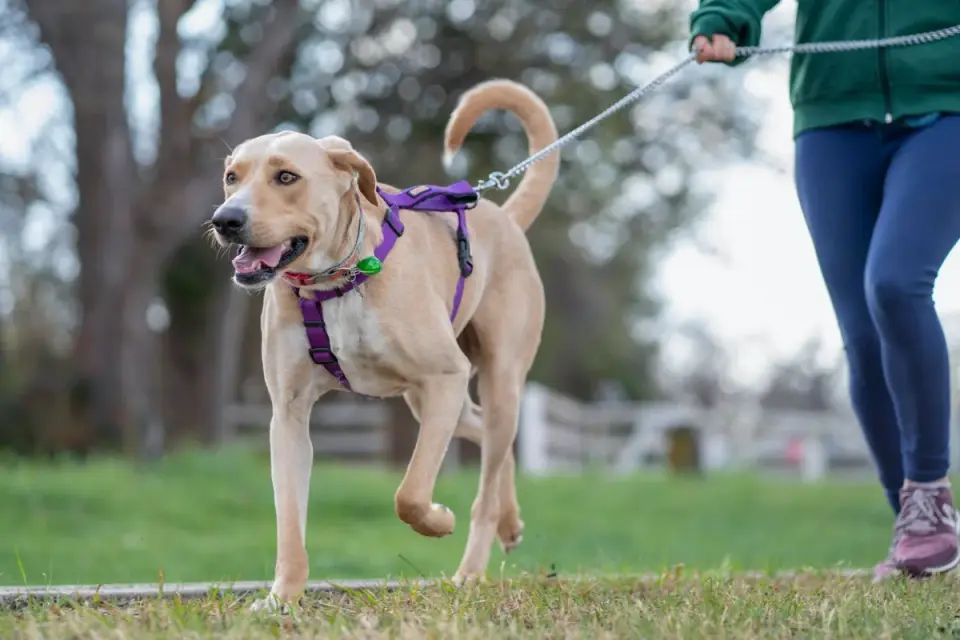
Shorter does not mean less enrichment. A 10-minute sniff walk with frequent pauses often leaves an arthritic dog more settled than a 25-minute march.
What cold changes, and what I still prioritize
The strongest counterargument I hear is that dogs need long winter walks to burn energy, and cutting back will cause weight gain and more stiffness. Weight matters for arthritic joints, and I take that concern seriously. My answer is to protect daily movement while changing the dose: two or three brief outings instead of one long one, plus indoor play, food puzzles, and nose work on harsh days.
The failed approach usually looks like good intentions layered too thick. A 9-year-old, 48-pound Border Collie mix started refusing her evening walk after her owner added a heavy coat, tall boots, and a new no-pull harness all in the same week. She stood frozen at the curb, then chewed at her front paws by day 10. The gear was not wrong, but the introduction was too much at once. When the owner went back to one change at a time, trimmed the walk to eight minutes, and let the dog choose the pace, the dog started moving freely again within four days. Support works best when you can tell what actually helped.
Footing and warmth deserve as much attention as distance. Ice, packed snow, and salted sidewalks increase slip risk and paw irritation. Use fitted boots only if your dog accepts them without altering gait, rinse and dry paws after salted routes, keep nails trimmed, and consider a well-fitted coat for lean, small, or senior dogs. A coat should cover the back and chest without binding the shoulders.
Supplements, food, and realistic expectations
Glucosamine and chondroitin come up on almost every winter visit, and the framing matters. Frontiers in Veterinary Science published work noting a chondroitin-related preparation supports healthy synovial fluid homeostasis, which is one reason joint nutrition gets attention during the stiff season. Journal of Veterinary Medical Science work reported that glucosamine HCl was found to prevent experimentally induced cartilage degradation in vitro, a laboratory finding rather than proof of pain relief on a walk. Nutrients work on marine oils reported that BMO, GMO, and KO all alleviated paw swelling in rats and reduced serum levels of rheumatoid factor (RF), anti-cyclic citrullinated peptide (anti-CCP) antibody, and pro-inflammatory cytokines such as TNF-α and IL-17.
That evidence keeps me in the middle: these ingredients may help support joint structure and normal function as part of a broader plan, but they do not replace weight control, appropriate exercise, traction at home, and veterinary care for pain. If you use a supplement, look for clear ingredient amounts, consistent daily use for several weeks, and guidance from your veterinarian, especially if your dog takes other medications. For background on how veterinarians confirm arthritis, see How Do Vets Diagnose Arthritis in Dogs? A Step-by-Step Look at the Exam, and for daily comfort basics, see How to Help an Old Dog With Stiff Joints.
The edge case that changes the plan is the dog who looks better once moving. A 13-year-old, 22-pound terrier mix would limp for the first minute on frosty mornings, then trot happily and resist turning home. His owner wanted to let him keep going because he seemed joyful. By day 14 of longer cold walks, he was restless at night and slow to rise the next morning. We set a timer, kept the walk to 12 minutes even when he pulled forward, and added a warm indoor cool-down with gentle Tui-na style stroking along the back and hind limbs. Night restlessness eased within a week. Joy during the walk does not always predict comfort afterward, so let recovery guide the next outing.
Call your veterinarian promptly for sudden non-weight-bearing lameness, joint swelling or heat, crying out, collapse, pale gums, uncontrolled shivering, or stiffness that worsens over days despite rest. For ingredient context beyond winter, Dog Hip and Joint Supplement: What the Ingredients Can (and Can’t) Do is a steady next read.
Winter comfort is built from small, repeatable choices: warm up inside, choose flat and sheltered ground, shorten the loop, protect paws, and hold realistic expectations with palliative gentleness.
Frequently asked questions
How long should a winter walk be for an arthritic dog?
Start with about half the distance your dog handled well in mild weather, on flat ground, and adjust based on recovery the next morning rather than enthusiasm mid-walk.
Should I still walk my arthritic dog every day in winter?
Daily gentle movement is often helpful, but split it into two or three brief outings and swap a walk for indoor sniff games or puzzle feeding on icy or bitterly cold days.
Sources
- Chondroitin, Synovial Homeostasis Study — Frontiers in Veterinary Science
- Glucosamine, Cartilage Degradation In Vitro Study — Journal of Veterinary Medical Science
- Marine Oils, Paw Swelling and Cytokines Study — Nutrients