On this page
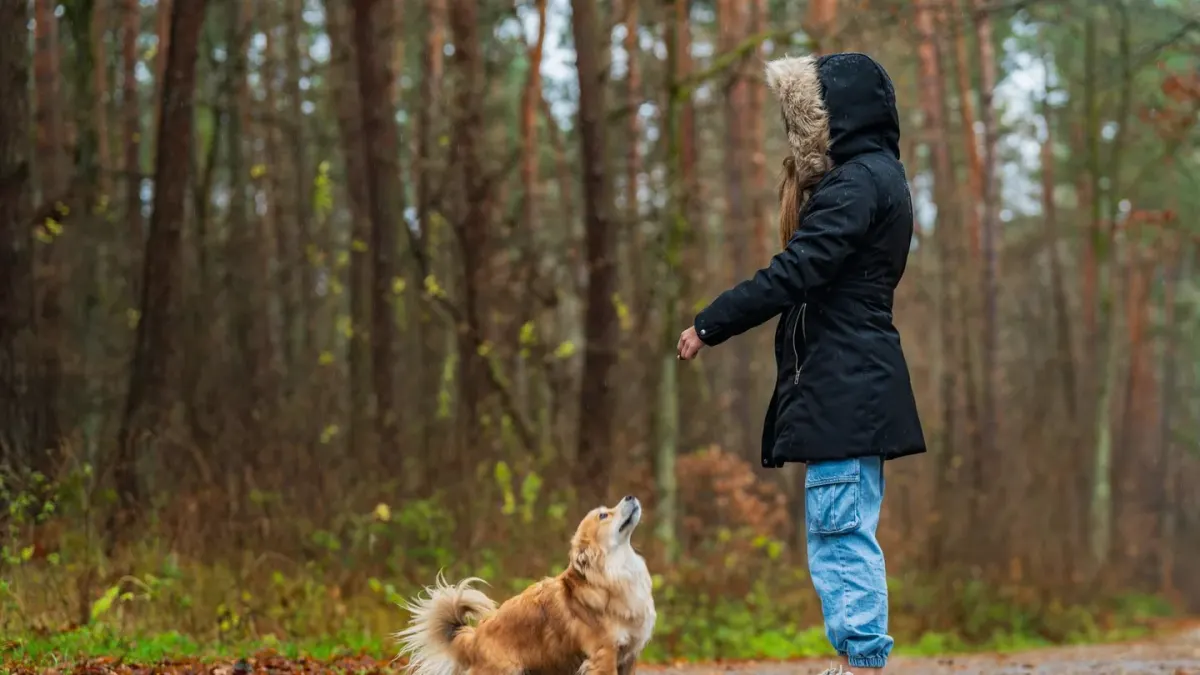
A ten-year-old 64-pound Golden Retriever starts balking at the curb on 28-degree mornings, then loosens by the second block while her owner wonders whether to turn back early. I see that hesitation a lot in January, and I don’t read it as a stop sign. Check gait, leash tension, and footing for the first five minutes, then decide. Shorten that single 30-minute loop into two 12- to 15-minute outings with a warm indoor start, and you often helps maintain an easier stride without the post-walk crash.
My verdict: split walks, don’t skip them
Cold does not damage the joint itself, but stiff muscles, cold paws, and slick ground make each step cost more. Total rest lets stiffness settle in harder.
Do this instead. Keep daily movement, cut distance per outing, and protect warm-up and traction. Walk after the warmest part of the day, pick plowed grass or packed dirt over ice, use a harness, and add a 3-minute indoor march-and-sniff warm-up first. Expect the first two minutes to look creaky. Judge the walk by minutes 5 to 10.
The strongest counterargument is real: a dog with a hot, swollen joint, a new limp, or pain that worsens during motion should not push through. That dog needs rest and a veterinary exam, not a training plan. Guidance on How Do Vets Diagnose Arthritis in Dogs? A Step-by-Step Look at the Exam walks through what that check involves. For the far more common winter pattern — slow start, then steady, then tired at home — I still land on gentle movement over couch rest, with expectations kept realistic.
Reshape the route for cold legs
An eight-year-old 48-pound Border Collie mix did fine on summer trails but started bunny-hopping stairs in February after her owner kept one long 40-minute night walk on frozen sidewalks. The failure was not exercise; it was dose and surface. We traded that single exposure for a morning 10-minute sun-side loop plus an evening 12-minute indoor-to-outdoor loop by day 10, added a coat and booties, and kept her to shoveled paths. Her evening pacing eased, though she still rose slowly from her bed. That tradeoff matters: you buy steadier steps, not a new joint.
Follow that same order at home. Lay carpet runners to the door. Warm the leash routine. Step out, turn into the wind on the way home, and stop while the dog still wants two more minutes. Rinse paws, dry between toes, and watch where the dog chooses to settle. For broader comfort routines, How to Help an Old Dog With Stiff Joints covers bedding and weight in more detail.
What I watch minute by minute
Start a timer in your head. Minutes 0 to 3 tell you about warm-up. Short steps, wide turns, and sniff-and-go are normal. Minutes 5 to 12 tell you about fit. A dog that lengthens stride, carries the tail more freely, and checks in easily is on the right dose.
Cut the walk short when you see toe dragging, repeated sitting, lagging behind your pace, panting in cold air, or shivering. Head home early for lifting a limb, yelping on a slip, or a sudden head-bob lameness. Log distance, surface, and recovery time for three weeks in a notebook; patterns beat memory.
Support the joint environment around those walks. Frontiers in Veterinary Science describes chondroitin research as work that “supports healthy synovial fluid homeostasis,” which fits why steady motion matters for comfort. Laboratory work summarized in the Journal of Veterinary Medical Science found glucosamine HCl could “prevent experimentally induced cartilage degradation in vitro,” and a review in Nutrients noted that “BMO, GMO, and KO all alleviated paw swelling in rats and reduced serum levels of rheumatoid factor (RF), anti-cyclic citrullinated peptide (anti-CCP) antibody, and pro-inflammatory cytokines such as TNF-α and IL-17.” None of that promises pain relief, and winter ingredients deserve the same clear-eyed framing as Dog Hip and Joint Supplement: What the Ingredients Can (and Can’t) Do.
The edge case that changes the plan
A thirteen-year-old 22-pound terrier mix with early kidney disease loved cold air but came home wired, drank heavily, then slept badly and woke stiffer for two days after a 25-minute lakefront walk. Shortening was not enough; timing and load were the levers. Three weeks in, her owner switched to four 8-minute scent loops near home, moved the longest loop to midday, and saved the lakefront for dry 35-degree afternoons only. Total weekly steps stayed similar, nighttime restlessness dropped, and morning rises looked less guarded. Older small dogs lose heat fast and pay for it later, so judge the dose by the next morning, not the wag on the trail.
Use gear as a tool, not a fix. A fleece or insulated coat helps maintain muscle warmth in lean, short-coated, and senior dogs. Booties help on salt and ice balls. A long line helps maintain sniffing without sprint-stop turns. Keep nails trimmed and consider traction socks indoors.
Take the next cold snap as your test week. Halve each walk, double the outings when you can, and protect sleep, weight, and footing first.
Frequently asked questions
Should arthritic dogs walk less in winter?
Walk more often for fewer minutes per outing. Keep total daily movement steady, shorten each loop, favor midday and high-traction surfaces, and stop while the dog still has energy left.
How do I know the walk was too long?
Watch recovery, not just the walk. Lagging, sitting down, new limping, or stiffness lasting over two hours or into the next morning means the dose was too high.
Do coats or booties help joint pain?
They do not treat joints, but warmth and traction helps maintain easier movement. Use a coat for lean, small, or senior dogs and booties for salt, ice balls, or slips.
Sources
- Chondroitin and synovial homeostasis in joint support — Frontiers in Veterinary Science
- Glucosamine and experimentally induced cartilage degradation — Journal of Veterinary Medical Science
- Marine oils and paw swelling in a rat model — Nutrients