Signs of Giardia in Dogs: What to Actually Watch For (and What to Rule Out First)
Medically reviewed by Jennifer Freeman, DVM, CVA — For general education — not a substitute for veterinary care.
Giardia rarely announces itself with one dramatic symptom — it shows up as a diarrhea that fades, comes back, and makes you start second-guessing the food bowl before you ever suspect a parasite.
On this page
Giardia rarely announces itself with one dramatic symptom — it shows up as a diarrhea that fades, comes back, and makes you start second-guessing the food bowl before you ever suspect a parasite.
The Myth: If It Were Giardia, He’d Be Sicker
This is the assumption I hear most often, and it’s backwards. Giardia is not usually the dog collapsed in the yard — it’s the dog who seems fine most days and then has a soft, greasy, bad-smelling stool for 48 hours, clears up on its own, and repeats the cycle two weeks later. According to VCA Hospitals, the diarrhea is often soft and greasy, sometimes with mucus, and vomiting is possible but far less common than the gut signs. Weight loss and low-grade lethargy can creep in if the infection lingers, especially in a young dog whose intestinal lining hasn’t caught up yet. What giardia is not, most of the time, is dramatic. That’s exactly why it gets missed or blamed on a diet change.
What’s Actually Happening Inside the Gut
Giardia lives as a trophozoite attached to the lining of the small intestine, interfering with nutrient absorption rather than invading tissue the way a bacterial infection might. It sheds as a hardier cyst form in the stool — the form that survives in soil and standing water for months and only takes a few ingested cysts to start a new infection. That combination — inconsistent shedding plus environmental persistence — is why signs can wax and wane even without treatment, and why a dog can look deceptively fine between bouts while still carrying the parasite.
Imagine a nine-month-old retriever mix who goes to a busy dog park twice a week. His owner notices loose stool on a Tuesday, chalks it up to a stolen scrap of hot dog at the park, and it clears by Friday. Two weeks later it’s back — same greasy texture, same faint sour smell, no blood, no fever. The dog is still playing fetch and eating normally. This is the pattern that should move giardia up the list, not down it: not one bad day, but a stool quality that keeps relapsing on roughly the same interval. An owner who treats each flare as an isolated diet upset will keep missing the thread that connects them.
Confirming It: Why One Fecal Check Isn’t the Final Word
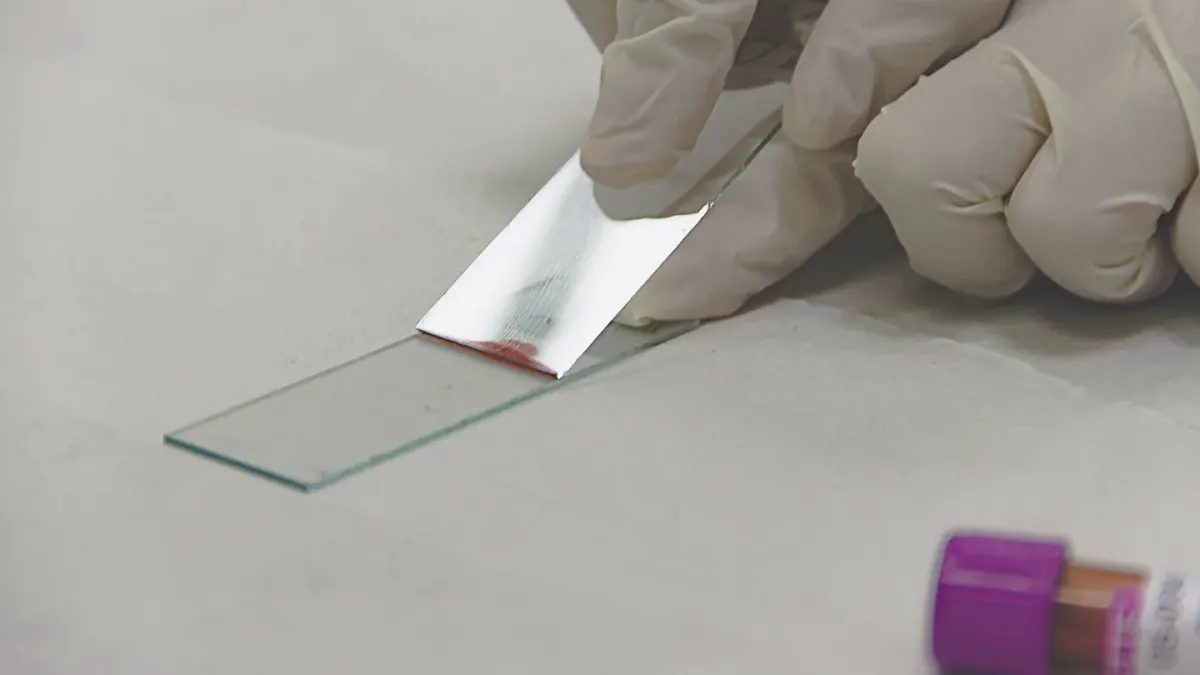
A routine fecal flotation can miss giardia because cysts are shed intermittently, not in every stool sample, and a standard solution doesn’t always concentrate them well. Companion Animal Parasite Council guidance supports using a fecal antigen test alongside — or instead of — a single flotation when giardia is suspected clinically, precisely because a negative flotation doesn’t rule it out. If your dog has the relapsing pattern described above and the first test comes back clean, that’s a reason to retest or ask for the antigen panel, not a reason to close the file.
Here’s where I part ways with a one-size-fits-all protocol, and where the phrase I keep coming back to actually matters: meet each dog on its own turf, one at a time. A healthy adult dog who tests positive but shows zero signs is a different case than a puppy with three weeks of relapsing diarrhea and mild weight loss, even though the lab result might read the same. Cornell University College of Veterinary Medicine notes that many infected dogs are asymptomatic carriers, and treating every positive result identically ignores that reality. The counterargument — treat every positive to reduce environmental shedding and zoonotic risk — has real weight in multi-dog households or homes with young kids. I still land on individualized treatment because blanket deworming of asymptomatic adult dogs adds drug exposure without a clear clinical upside for that specific dog, and it does nothing to fix the shared water bowl or yard that’s the actual reinfection source.

Treatment, and the Part That Gets Skipped
When treatment is indicated, it’s usually straightforward and short — a course prescribed and dosed by your veterinarian based on your dog’s weight and history. What gets skipped is the week or two after the parasite is gone, when the gut lining is still recovering and stool quality can stay inconsistent even on a clean recheck. This is where I ask owners to slow down rather than assume relapse.
Picture a senior beagle who finishes a full course of treatment, retests negative, and then has two loose stools the following week. The owner calls, worried the giardia never left. More often, this is a gut still settling — not a treatment failure. It’s a pattern worth watching for another week before assuming the worst, and it’s a reasonable moment to talk with your vet about supportive digestive care rather than another round of medication. A balanced gut microbiome supports overall immune function, but probiotic response is genuinely individual — a study in Frontiers in Veterinary Science found that diversity metrics didn’t distinguish dogs who responded to probiotic supplementation from those who didn’t. That’s not a reason to skip the conversation, just a reason not to expect a guarantee from any single product. Pumpkin fiber is also a gentle, natural source of both soluble and insoluble fiber that some vets reach for during this settling period, though it’s a supportive step, not a treatment for the infection itself.
It’s also worth separating giardia from other causes of persistent loose stool before assuming every relapse is the same parasite returning. Chronic diarrhea with weight loss can have other drivers — for example, exocrine pancreatic insufficiency is managed with enzyme replacement, diet changes, and cobalamin support rather than antiparasitics, according to a review in JAVMA. If a dog’s signs don’t track the classic giardia pattern, or don’t resolve after appropriate treatment, that’s the point to widen the differential rather than repeat the same test.
Reducing Reinfection Without Overhauling Everything
Cysts survive in damp soil and standing water for months, so the practical fixes are boring but effective: pick up stool promptly, avoid known puddle and communal water sources during and just after treatment, wash bedding, and bathe the dog near the end of the treatment course to remove cysts clinging to the coat. None of this requires disinfecting the whole house. It requires breaking the loop between where the dog eliminates and where the dog drinks or sniffs.
If you’re rebuilding a gut after a giardia episode and want to understand what’s actually in a digestive supplement before adding one, our guide to Best Probiotic for Dogs breaks down strains, CFU counts, and prebiotic fiber on a shared rubric. And if a label’s human-grade claim is part of what’s steering your decision, What “Human-Grade” Actually Means in a Dog Probiotic is worth reading before you buy, not after.
Practical Next Step
If your dog’s stool has gone soft-and-greasy, cleared, then returned on roughly the same rhythm, don’t wait for a dramatic symptom that may never come. Call your vet, ask specifically about a fecal antigen test if a flotation already came back clean, and expect a treatment decision built around your dog’s actual signs and household risk — not a reflex response to one lab result.
Frequently asked questions
Can a dog have giardia and show no symptoms at all?
Yes. Many dogs, particularly adults with mature immune systems, carry giardia without ever developing diarrhea or other visible signs, according to Cornell University College of Veterinary Medicine. This is one reason a positive test alone doesn't automatically mean a dog needs treatment.
How long after exposure do signs of giardia show up?
Giardia has an unusually long window between exposure and detectable shedding, which is part of why timing a fecal test matters and why a single negative result early on shouldn't close the case if signs persist.
Is giardia in dogs contagious to people?
It can be, though human infection from a dog is considered uncommon. Households with young children, elderly members, or anyone immunocompromised should be more cautious about hygiene during and after a dog's treatment.
Should I give my dog a probiotic during or after giardia treatment?
It's a reasonable question to raise with your vet. A balanced gut microbiome supports overall immune function, but probiotic response varies dog to dog — research in Frontiers in Veterinary Science found that diversity metrics did not distinguish which dogs responded to probiotic supplementation from those who didn't, so treat it as a supportive step, not a guaranteed fix.
Sources
- Giardia in Dogs: Symptoms & Treatment — VCA Hospitals
- Giardia Guidelines — Companion Animal Parasite Council
- Giardia: Infection, Treatment and Prevention — Cornell University College of Veterinary Medicine
- Exocrine Pancreatic Insufficiency Review — JAVMA
- Probiotic Response Variability in Dogs — Frontiers in Veterinary Science