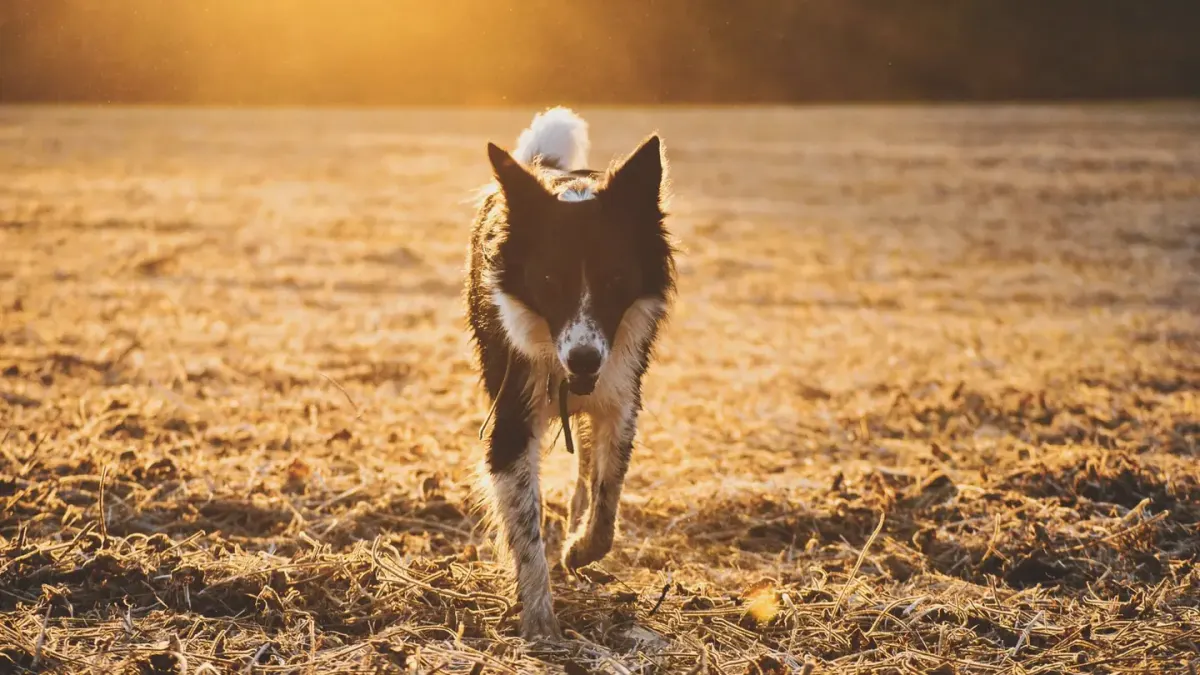
A seven-year-old, 68-pound Labrador stops for three extra beats before following her owner down the porch steps on a cool morning, then walks it off by the mailbox and wags through the rest of the loop. That brief hesitation, gone after warming up, is the classic entry point for early-stage arthritis in dogs. Owners often expect vocal pain or a clear limp, and when neither appears they dismiss what they saw.
My verdict is direct: treat repeated morning stiffness, slowed rising, and reduced willingness to climb or play as joint-related until a veterinarian proves otherwise. From an acupuncture-and-TCM perspective, I read this as Qi and Blood moving sluggishly through the channels after rest, which translates in plain terms to joints that need gentle, regular movement and load control to may help support comfortable mobility. The strongest counterargument is that these signs are just normal aging, and rest alone will manage them, yet waiting tends to allow muscle loss and stiffer movement patterns to settle in.
The early pattern owners actually notice
Early arthritis is a change in ease, not ability. The dog still does everything, but the transitions look heavier. Rising from a bed takes two attempts. The first five minutes of a walk are slow, then movement smooths out. Play bouts shorten. Stairs, car jumps, and slippery floors draw refusal or a new technique, such as bunny-hopping or pulling with the front legs. Some dogs lick a wrist or knee, shift weight while standing, or lag on one direction of a turn.
A nine-year-old, 52-pound Border Collie mix showed this tradeoff clearly over three weeks in a farmhouse with hardwood floors. She stopped greeting at the door and waited on her rug instead, and her owner first tried extra rest and a soft new bed. Rest alone made mornings worse because stillness increased stiffness, while short leash walks and rugs on the turn toward the kitchen restored her greeting routine within days. The lesson was not that rest is wrong, but that prolonged stillness lets early joint discomfort dictate the day.
In channel terms, cold and damp mornings aggravate stagnation, which is why owners see the worst version of the dog before breakfast and the best version by midday. That daily rhythm matters more than any single limp. I ask owners to track warming-up time, stair willingness, and walk distance for seven to ten days rather than judging one outing. Video of the rise, the first twenty steps, and a turn in each direction gives a veterinarian far more than a description of pain.
What the joint is doing underneath the stiffness
Osteoarthritis involves cartilage wear, low-grade inflammation, and changes in joint fluid and surrounding muscle. Research language is careful here for good reason. Chondroitin has been described in peer-reviewed work as an ingredient that “supports healthy synovial fluid homeostasis,” reported in Frontiers in Veterinary Science, which in owner terms means helping maintain the normal cushioning environment inside the joint rather than rebuilding anything. Laboratory work on glucosamine has found that it can “prevent experimentally induced cartilage degradation in vitro,” as reported in the Journal of Veterinary Medical Science, a cell-culture finding that may help support joint structure but does not prove pain relief in a living dog.
Green-lipped mussel research is similarly early and mechanistic. One comparative study noted that “BMO, GMO, and KO all alleviated paw swelling in rats and reduced serum levels of rheumatoid factor (RF), anti-cyclic citrullinated peptide (anti-CCP) antibody, and pro-inflammatory cytokines such as TNF-α and IL-17,” published in Nutrients. That finding may help support interest in omega-3 fatty acids and glycosaminoglycans for joint support, not a reason to expect a supplement alone to reverse arthritis. My evidence-bounded position is that consistent weight control, daily low-impact movement, traction, and veterinary diagnosis deserve priority, with needle-and-herb approaches used to may help support flow and comfort alongside that plan.
That plan starts with an exam while signs are still subtle. How Do Vets Diagnose Arthritis in Dogs? A Step-by-Step Look at the Exam explains what orthopedic testing and imaging can confirm, and How to Help an Old Dog With Stiff Joints outlines practical home adjustments for traction, bedding, and walk structure. For ingredient background without product hype, Glucosamine vs. Green-Lipped Mussel for Dog Joints: What Each One Actually Does is a useful companion read.
When early signs are not arthritis
Not every slow rise is arthritis, and that distinction is where early action helps most. Neurologic weakness, a cruciate sprain, paw pain, or simply excess weight can mimic stiffness. The edge case I watch for is the stoic middle-aged dog who looks sound on walks but refuses only one specific movement.
An eleven-year-old, 44-pound spaniel type kept her mile loop by day 10 of tracking yet refused the two stairs to the yard every evening, which her owner first read as stubbornness. Morning was fine, afternoons were fine, and only that tired-evening transition revealed the limit, suggesting focal hind-limb fatigue rather than generalized aging. A veterinarian found early hip discomfort plus weak thigh muscle, and a ramp plus shorter evening outing changed the pattern more than any morning routine did. The application point is narrow and practical: map which joint, which time of day, and which surface triggers the change.
Call your veterinarian promptly for sudden non-weight-bearing lameness, joint swelling or heat, crying when touched, fever, or rapid worsening over 24 to 48 hours. For the slow early pattern, book a non-urgent exam, bring your log and videos, and avoid starting high-impact exercise or long rest cures on your own. Early arthritis is manageable, but only what is accurately identified can be supported well.
Frequently asked questions
Does early dog arthritis always cause limping?
No. Most early cases show stiffness after rest, slower rising, and shorter play rather than a consistent limp. A limp that warms up and returns after rest still deserves a vet exam.
Should I rest my dog if mornings look stiff?
Brief warm-up movement usually helps more than full rest. Keep walks short, flat, and regular, improve traction at home, and ask your vet to confirm the cause before changing exercise.
Sources
- Synovial fluid homeostasis in joint health — Frontiers in Veterinary Science
- Glucosamine and cartilage degradation in vitro — Journal of Veterinary Medical Science
- Marine oils and inflammatory markers in rats — Nutrients