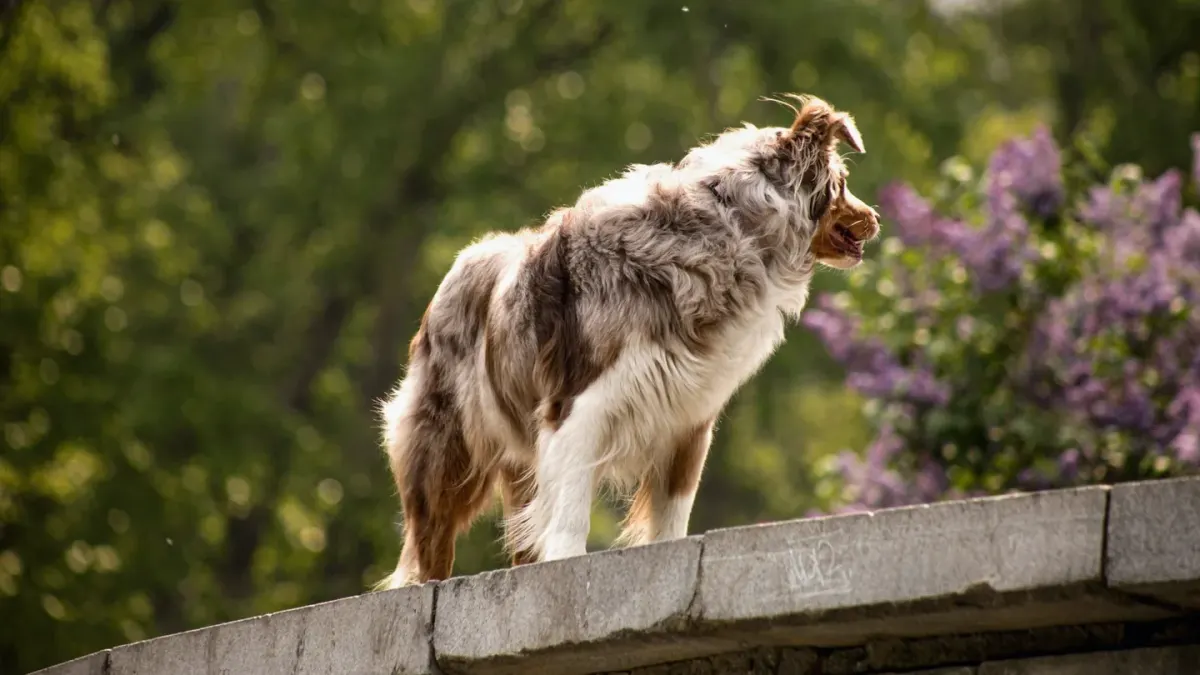
You notice it on an ordinary Tuesday. Your dog chases a ball, yelps once, and then holds up a hind leg for a few strides. By evening she is walking again, and you wonder if you imagined it. In my decades of hands-on integrative practice, that on-again, off-again lameness is the most common way a cranial cruciate ligament tear first shows itself.
Reason from first principles, unhurried, and the knee tells a clear story. The cranial cruciate ligament is a short, tough band inside the stifle, which is your dog’s true knee. It keeps the tibia from sliding forward under the femur with every step. When its fibers fray or rupture, the joint slides in a way it was never meant to slide, and the menisci, cartilage, and joint fluid all feel that instability.
A seven-year-old, 84-pound Labrador I followed in a composite case comes to mind. She had slowed on stairs for a month, then cried out while turning sharply for a toy in the yard. She was toe-touching lame that night, nearly normal for three days, then stiff again after a long walk. Her owner weighed rest against an urgent vet visit, and that uncertainty is the main decision you face early on. Lameness that shifts in this pattern deserves an exam within days, not watchful waiting for weeks.
What the ligament does and why it fails
Most tears in dogs are not like a football injury in a person. They are usually degenerative. Age, body weight, conformation with a steep tibial plateau angle, and chronic low-grade inflammation weaken the ligament over months or years until normal play finishes the job. Large, active breeds tear it more often, but I have seen it in small dogs whose knees simply wore unevenly over time.
Once torn, the joint loses its front-to-back stability. Fluid builds up, the joint capsule thickens, and arthritis begins to remodel the bone. Research on joint biology helps explain why that environment matters. Work published in Frontiers in Veterinary Science notes that chondroitin “supports healthy synovial fluid homeostasis,” which is another way of saying the fluid that bathes and nourishes cartilage depends on balance to do its work. An unstable stifle disrupts that balance.
How a CCL tear tends to look and feel at home
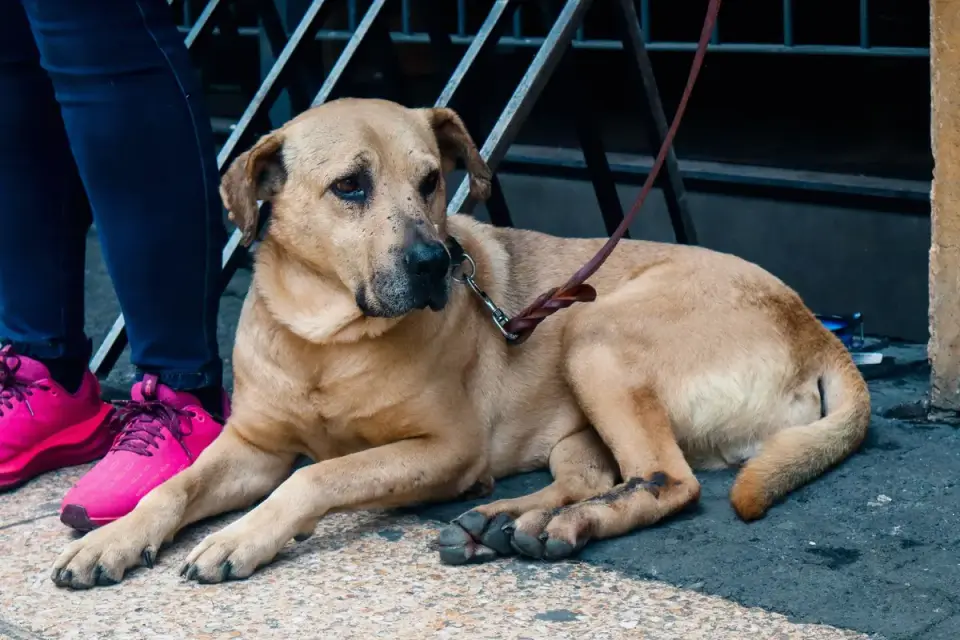
You are watching for cranial cruciate ligament symptoms more than a single dramatic event. A partial tear often brings stiffness after rest that warms out of the stride, sitting with the sore leg kicked out to the side, reluctance to jump into the car, clicking from the knee, and muscle thinning over the thigh on the sore side. A complete tear often brings sudden non-weight-bearing lameness, swelling on the inside of the knee, and a toe-down posture.
A five-year-old, 62-pound pitbull-type dog shows the tradeoff that complicates care. After two weeks of intermittent limping, her owner rested her strictly for ten days. By day 10 she looked sound, so they resumed fetch. Three weeks in she went fully lame after a turn, and the second exam found a complete tear with meniscal pain. Rest had quieted the signs without restoring stability, which is why feeling better is not the same as being healed. If your dog improves with rest and then worsens with activity more than once, you are likely watching instability, not a strain.
Diagnosis in the clinic is hands-on. Your veterinarian will watch you walk, feel for joint effusion and a buttress of thickened tissue on the inside of the knee, and test for cranial drawer and tibial thrust. Sedation and radiographs help rule out other causes and show arthritic change, and you can read more about that process in How Do Vets Diagnose Arthritis in Dogs? A Step-by-Step Look at the Exam. Cartilage itself is vulnerable once mechanics change. An in vitro study described in the Journal of Veterinary Medical Science found that glucosamine HCl can “prevent experimentally induced cartilage degradation in vitro,” which reminds us that cartilage health is active and fragile, though a dish is not a dog.
What I prioritize after diagnosis, and what I do not
My evidence-bounded recommendation is straightforward. Stabilize the mechanics first, then may help support comfort and mobility around that stable joint with weight control, rehabilitation, and thoughtful nutrition. That means an honest surgical conversation for most complete tears, structured physical therapy whether you choose surgery or careful medical management, and a lean body condition above all else. In plain counsel, supplements may help support balance and whole-patient wellness, and they do not reattach a torn ligament.
The strongest counterargument comes from owners whose older or medically fragile dogs cannot safely undergo surgery, and from a smaller group of small dogs that cope with bracing and rehabilitation. That path can be reasonable with strict weight control and professional rehab, yet it asks more of you in monitoring, activity restriction, and arthritis care over time. I still land on mechanics first because no powder or chew changes tibial slide, and chronic instability grinds the meniscus. You can learn what joint formulas can honestly offer in Dog Hip and Joint Supplement: What the Ingredients Can (and Can’t) Do and How to Help an Old Dog With Stiff Joints.
An edge case changed how I counsel active households. A nine-year-old, 48-pound Border Collie tore one side, recovered well from surgery, and then tore the opposite CCL fourteen months later. That second tear is common enough that I now treat the first diagnosis as a whole-dog关节 plan, and I am careful here. Joint ingredients studied for joint support, such as the omega-3 fatty acids and glycosaminoglycans in green-lipped mussel noted in veterinary reviews, deserve context rather than hype. One review summarized in Nutrients reported that “BMO, GMO, and KO all alleviated paw swelling in rats and reduced serum levels of rheumatoid factor (RF), anti-cyclic citrullinated peptide (anti-CCP) antibody, and pro-inflammatory cytokines such as TNF-α and IL-17.” That is rat and laboratory work, not proof of ligament healing in your dog, and ingredients like those in Glucosamine vs. Green-Lipped Mussel for Dog Joints: What Each One Actually Does are best viewed as part of long-term joint support.
If you suspect a tear, keep your dog quiet, avoid stairs and slippery floors, use a short leash for potty breaks, and call your veterinarian promptly.
Frequently asked questions
What are the first symptoms of a CCL tear in a dog?
Intermittent hind-leg lameness, stiffness after rest, sitting with the leg out to the side, reluctance to jump or climb stairs, and gradual thigh muscle loss on the affected side are common early signs.
Can a dog walk on a torn CCL?
Many dogs still walk, often toe-touching lame, and partial tears may look better after a few days of rest. Continued instability usually brings the limp back with activity.
Does a CCL tear heal on its own?
The ligament does not reattach itself. Some small or medically fragile dogs are managed with weight control, rehabilitation, and pain management, but most complete tears need surgical stabilization for lasting function.
Sources
- Chondroitin and synovial fluid homeostasis study — Frontiers in Veterinary Science
- Glucosamine and in vitro cartilage degradation study — Journal of Veterinary Medical Science
- Marine oil joint inflammation study in rats — Nutrients