On this page
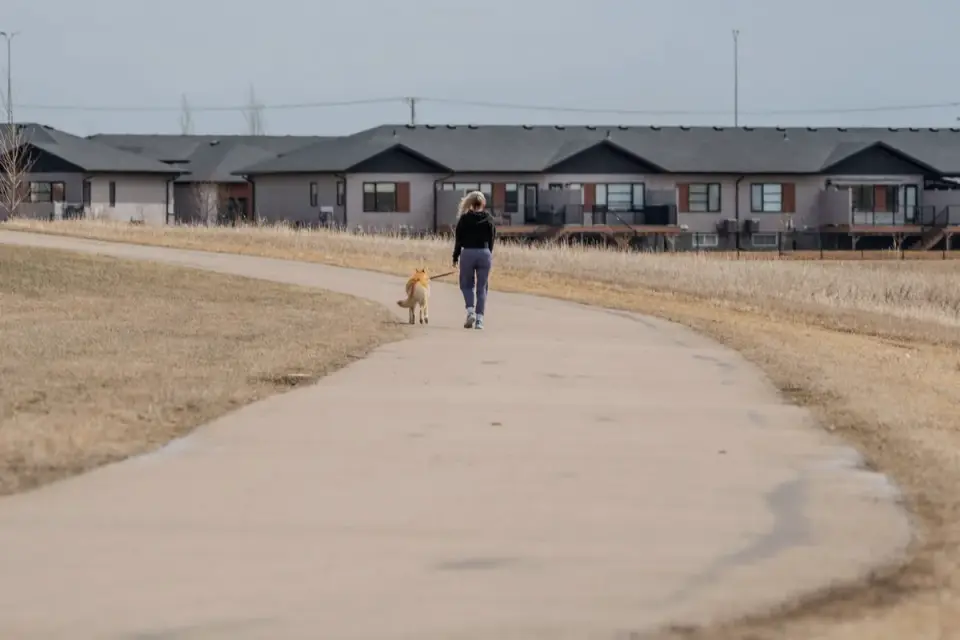
You watch it on the morning sidewalk before you have a name for it. Your eight-year-old, 54-pound Lab mix steps off the curb, rounds his topline like a frightened cat, takes five short steps, then flattens out again like nothing happened. By the third driveway he is walking almost normally, tail mid-height, sniffing. That flicker — hunched for a few strides, then gone — is the decision point. In my exam room that pattern usually means guarding, and my verdict is simple: treat a new hunched walk as pain until a veterinarian shows you otherwise.
That sounds blunt, but dogs do not arch for posture. They arch to unload something sore.
My verdict first: guarding is a whole-body plan, not one joint
Western structure/function language calls this kyphosis or splinting — tight belly and back muscles bracing around discomfort in the spine, discs, abdomen, or sometimes hips and stifles. Eastern pattern language would describe many of these dogs as cold-damp stagnation with underlying Kidney deficiency, especially the older, stiff-in-the-morning dog who moves better after warmth. I set those frames side by side because the plan has to cover all four pillars at once: acupuncture and Tui-na bodywork to release the bracing, Chinese herbs matched to pattern, food therapy that is warm and digestible, and plain Western rest, footing, and diagnosis.
I still land on diagnosis before supplements. The strongest counterargument is that many hunched dogs feel better with rest and a joint chew alone, so why pay for an exam. I have watched that shortcut miss pancreatitis, a disc extrusion, and a bladder stone in three different months. Supportive care has its place once you know what you are supporting.
What that roach actually tells you on the walk
Forget trying to diagnose from the arch alone. Watch the edges around it. A back-pain dog often walks with head low, neck stiff, reluctant to turn, yelps when you lift under the belly, and may drag or scuff rear toes. An abdominal-pain dog often pairs the hunch with prayer position, lip licking, drooling, vomiting, or a tight, tucked belly. A chronic joint dog tends to hunch more when rising, on stairs, or on slick floors, then loosens after two to three minutes of easy movement.
That last group is where owners ask me about long-term joint support. Glucosamine and chondroitin are among the most studied joint support ingredients for dogs, and the basic science is modest and mechanical. One laboratory review found glucosamine HCl could “prevent experimentally induced cartilage degradation in vitro” in work summarized by the Journal of Veterinary Medical Science, which is not proof of pain relief but helps explain why these ingredients keep showing up in mobility formulas. Separate work on chondroitin described a role that “supports healthy synovial fluid homeostasis” in Frontiers in Veterinary Science, the fluid balance that lets joints glide rather than grind.
Green-lipped mussel gets mentioned in the same breath because it contains omega-3 fatty acids and glycosaminoglycans that have been studied for joint support, and rodent work found that “BMO, GMO, and KO all alleviated paw swelling in rats and reduced serum levels of rheumatoid factor (RF), anti-cyclic citrullinated peptide (anti-CCP) antibody, and pro-inflammatory cytokines such as TNF-α and IL-17” according to Nutrients. That is early, animal-level data. It may help support normal inflammatory balance, not cure arthritis.
You do not need to memorize that chemistry on the sidewalk.
When I tried rest alone and learned its limit
She was eleven years old, a 62-pound pit mix with a gray muzzle who had started slowing on our evening loop around the park. For three weeks in I told myself it was age and cold concrete, so I shortened the walk, added a rug runner in the hallway, and borrowed a friend’s joint chew without a real plan. By day 10 she looked brighter for an hour after the walk, then hunched harder in the kitchen that night, shifting weight, panting, refusing the last three steps to the couch. The radiographs later showed spondylosis plus a tight iliopsoas, and the failed rest-only stretch taught me what I now teach: comfort without clarity just moves the soreness to the evening.
Red flags that move you from watch to vet today
Call promptly or go urgent if the hunch arrives with any of these: sudden rear weakness or dragging, screaming when touched, repeated vomiting or retching, bloated hard belly, fever, pale gums, straining to urinate, bloody urine or stool, not eating for more than 24 hours, or a hunch after a fall, car bump, or rough play. Older intact males who hunch and strain, small breeds who tremble and will not jump, and any dog hunched for more than a day without improvement deserve same-day care.
In the exam, expect what is outlined in How Do Vets Diagnose Arthritis in Dogs? A Step-by-Step Look at the Exam — gait watch, palpation of spine and hips, neurologic checks, and often radiographs. If belly pain is suspected, bloodwork, urinalysis, and ultrasound enter quickly. Bring video of the walk, note which side is worse, and list every chew, food, and medication.
What a calm integrative workup actually covers
I think in four pillars even on a first visit. Acupuncture may help support circulation and muscle release around a locked thoracolumbar junction. Tui-na and gentle myofascial work address the secondary bracing through the lats, obliques, and hip flexors that keep the back rounded. Food therapy means warm, cooked, easy-to-digest meals, steady weight, and no midnight rich treats when the pancreas is suspect. Herbs are pattern-matched, never one-size, and layered only after Western rule-outs.
At home while you wait for the appointment, keep it boring: short leash potty walks on grass, non-slip rugs, ramp instead of jump, no twisting fetch, no long hikes to “loosen him up.” Note morning versus evening stiffness for your vet, since that timeline guides whether this leans spinal, abdominal, or chronic joint. For the stiff senior who does loosen with gentle motion, How to Help an Old Dog With Stiff Joints is a useful next read on footing, weight, and pacing.
If your vet does point to chronic mobility stiffness rather than an urgent belly or disc issue, ingredient literacy helps more than brand loyalty. Glucosamine vs. Green-Lipped Mussel for Dog Joints: What Each One Actually Does walks through how those two categories differ without promising a cure.
The edge case that changes the plan at 2 a.m.
He was six years old, a 22-pound French Bulldog mix who had been perfectly goofy at dinner, then woke at 2 a.m. hunched, trembling, and refusing the three steps down to the yard. No vomiting, no fall, just a tight back and a look that said do not touch my neck. By morning of day 2 he would walk ten feet, arch, sit, then try again, and his owner worried it was constipation. That overnight timeline plus neck guarding pushed us toward disc disease rather than belly or hips, and the lesson stuck: a small dog with a sudden hunch plus reluctance to lower the head needs a neurologic exam first, not fiber and waiting.
Frequently asked questions
Can a hunched back just be old age or poor posture?
Age makes stiffness more likely but a new arch is still guarding until proven otherwise. Look for stiffness easing after a few minutes versus persistent hunch, weakness, or belly signs, and have new changes examined.
Should I give a joint supplement when my dog starts hunching?
Not before you know the source. Joint ingredients may help support normal mobility in chronic joint cases, but a sudden hunch can mean disc, abdominal, or urinary pain that needs prompt diagnosis first.
Sources
- Preventive effects of glucosamine on cartilage degradation — Journal of Veterinary Medical Science
- Chondroitin and synovial homeostasis review — Frontiers in Veterinary Science
- Marine oil anti-inflammatory mechanisms in rodents — Nutrients