Dog Hind Leg Weakness: A Veterinary Neurologist's Checklist for What It Actually Means
Medically reviewed by Karen Inzana, DVM, PhD, DACVIM (Neurology) — For general education — not a substitute for veterinary care.
Hind leg weakness in a dog usually points to the spine, the hips, or the nerves — rarely all three.
On this page
- Check This First: The Five-Point Hind-Leg Checklist
- The Verdict: Rule Out Pain and Structure Before You Rule In Nerve Disease
- Why Orthopedic and Neurologic Weakness Look Alike — and Why the Mechanism Matters
- What a Slow Decline Usually Looks Like
- Red Flags That Move This From “Watch It” to “Go Today”
- Where Antioxidant Supplements Fit — and Where the Marketing Outruns the Data
- What Actually Helps: The Diagnostic Path
- The Bottom Line
Hind leg weakness in a dog usually points to the spine, the hips, or the nerves — rarely all three. That distinction is the whole ballgame, and it is where most owners (and, frankly, most supplement marketing) go looking for the wrong answer first.
Imagine a nine-year-old Labrador who has started sitting down mid-walk, back legs splaying slightly on the hardwood before she catches herself. Her owner assumes arthritis, because that’s the story everyone tells about a big dog slowing down at nine. But the pattern matters more than the age: does she knuckle her toes so the top of the paw drags? Does she still wag with full coordination, or has the tail gone quiet too? Is she reluctant to rise but moves fine once up, or does she look weak the entire walk? Those questions sort orthopedic pain from a spinal cord pathway faster than almost anything else you can do at home, and they’re the reason a careful gait exam still beats a guess.
Check This First: The Five-Point Hind-Leg Checklist
- Onset speed — sudden (hours to a day) versus gradual (weeks to months)
- Symmetry — both hind legs equally, or one side clearly worse
- Pain response — yelping, guarding a stretch, reluctance to jump, versus no pain at all
- Toe-knuckling — does a paw drag or flip under when she walks
- Bladder or bowel changes — any leaking, straining, or loss of control
If pain is obvious and the weakness is symmetric with no dragging, orthopedic disease (hips, knees, spine arthritis) is the leading suspect. If there’s dragging, asymmetry, or bladder involvement, a neurologic pathway — most often the spinal cord — moves to the top of the list.
The Verdict: Rule Out Pain and Structure Before You Rule In Nerve Disease
My own bias, and it is a bias grounded in how often I’ve seen the alternative go wrong, is this: start with pain and structure, not with the spinal cord, unless the exam says otherwise. Orthopedic disease is more common than degenerative myelopathy at any given age, it is treatable in ways spinal cord degeneration is not, and missing it while chasing a neurologic diagnosis costs a dog real comfort. The strongest counterargument is that orthopedic and neurologic disease can coexist — an arthritic hip and an early degenerative myelopathy in the same aging Shepherd is not rare — so a single negative orthopedic exam shouldn’t close the file. It should narrow it.
Why Orthopedic and Neurologic Weakness Look Alike — and Why the Mechanism Matters
Pain changes gait by making a dog unwilling to load a joint fully. Neurologic weakness changes gait because the pathway carrying signal from brain to muscle is degraded somewhere along the way — the spinal cord, a nerve root, or the muscle itself. Those two mechanisms can produce a nearly identical stumble from across the room. The difference shows up in proprioception: a dog with a neurologic deficit often can’t reposition a knuckled paw correctly, because the sensory pathway reporting paw position is the one that’s compromised. A painful hip doesn’t touch that pathway at all. This is a genuinely useful, low-cost test any vet can run in under a minute, and it’s why I’d rather watch a dog walk and turn a paw over than start with imaging.
What a Slow Decline Usually Looks Like
Consider a twelve-year-old Corgi whose owner describes months of gradual change: a wobble in the back end that used to show up only on tile, now present on carpet too, with no yelping and no obvious pain anywhere. That story — insidious, painless, progressive, breed-typical — is the classic presentation of degenerative myelopathy, a slowly progressive degeneration of the spinal cord’s white matter tied to a mutation in the SOD1 gene, described in the Degenerative Diseases of the Spinal Column and Cord in Animals entry from the Merck Veterinary Manual. It’s most recognized in German Shepherds, Pembroke Welsh Corgis, Boxers, Rhodesian Ridgebacks, and Chesapeake Bay Retrievers, generally over eight years old, per Degenerative Myelopathy from Cornell University College of Veterinary Medicine. It is a real disease with a real genetic test through the Orthopedic Foundation for Animals — and it is also the diagnosis I see over-assumed the most, because a painful disc or an arthritic spine can produce a similar slow wobble without ever touching the spinal cord parenchyma. Separating the two on history and exam, before anyone commits to a genetic label, is not optional.
Red Flags That Move This From “Watch It” to “Go Today”
A sudden inability to bear weight on both hind legs, especially paired with pain, is an emergency — it’s the classic presentation of acute disc extrusion, covered alongside other spinal cord conditions in Disorders of the Spinal Column and Cord in Dogs, also from the Merck Veterinary Manual. So is any new loss of bladder or bowel control. So is weakness that’s progressing hour by hour rather than week by week. None of those wait for a scheduled appointment.
Where Antioxidant Supplements Fit — and Where the Marketing Outruns the Data
Quercetin shows up constantly in senior-dog and longevity formulas, and the basic-science interest is real: a lecithin-formulated quercetin extended stress resistance and lifespan in C. elegans, a nematode model, according to a study published in Pharmaceuticals. That is a cellular-pathway finding in a worm, not a claim about canine spinal cord function, and I’d flag any label that blurs the two. Supporting normal cellular and antioxidant activity is a legitimate, evidence-bounded thing to say about an ingredient like quercetin. Treating or reversing a neurologic deficit — from degenerative myelopathy, a disc lesion, or anything else — is a different claim entirely, and it isn’t one this evidence supports. Our related guides on quercetin for dogs and on what NAD+ supplements actually support go deeper into that ingredient-level evidence, and our review of whether vets actually recommend NAD+ products covers the same overreach problem from the label side.
What Actually Helps: The Diagnostic Path
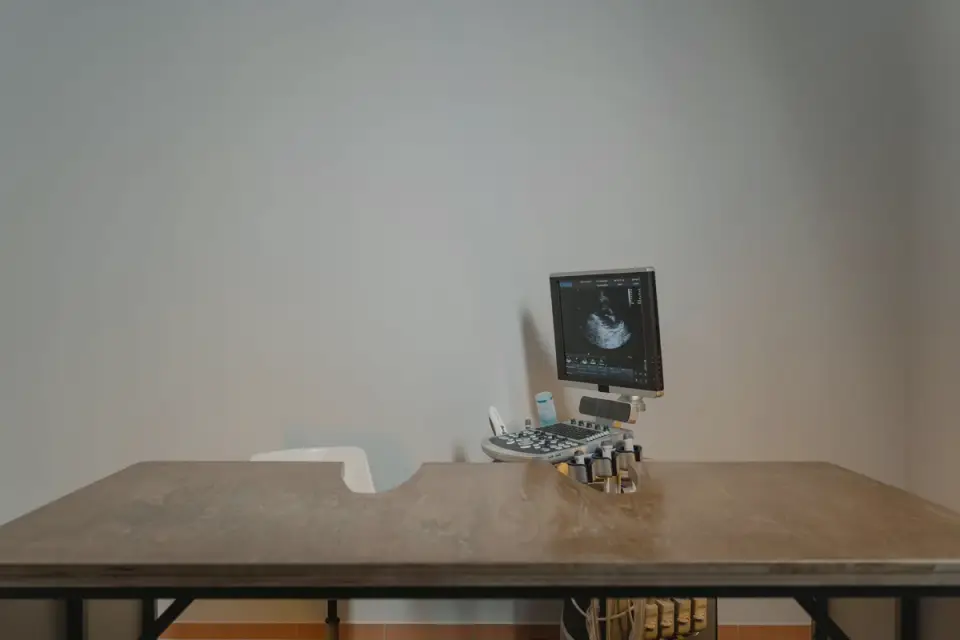
An orthopedic and neurologic exam comes first, every time. From there, X-rays screen for hip or spine arthritis and gross disc changes; MRI is the tool that actually visualizes spinal cord compression or degeneration in detail, and it’s usually what separates a compressive lesion (often surgical) from degenerative myelopathy (not surgical, managed with physical rehabilitation and mobility support). The SOD1 genetic test adds evidence but doesn’t replace imaging when the picture is ambiguous, because carrying the mutation doesn’t guarantee the dog is symptomatic from it.
The Bottom Line
Get the exam and the gait assessment before you get the theory. Weakness has a mechanism, and until you know which one you’re dealing with, no chew, no gait, and no guess is worth trusting over a hands-on evaluation.
Frequently asked questions
Is hind leg weakness always a neurologic emergency?
No. Slow, symmetric weakness that builds over weeks is often orthopedic or a gradually progressive spinal condition. Sudden weakness, dragging toes, loss of bladder control, or pain that won't let a dog settle is what moves this into same-day territory.
Can supplements reverse hind leg weakness?
No supplement reverses degenerative myelopathy or repairs a compressed disc. Ingredients like quercetin and resveratrol are studied for antioxidant and cellular-support pathways, not for restoring lost neurologic function, and that distinction matters when you're reading a label.
What breed patterns should make me ask about degenerative myelopathy?
German Shepherds, Pembroke Welsh Corgis, Boxers, Rhodesian Ridgebacks, and Chesapeake Bay Retrievers over roughly eight years old show this pattern most often, per the Merck Veterinary Manual, though it turns up occasionally in other breeds too.
What test actually confirms degenerative myelopathy versus a look-alike condition?
A DNA test for the SOD1 mutation, available through the Orthopedic Foundation for Animals, supports the diagnosis, but imaging (MRI) is still used to rule out compressive spinal disease that looks similar on exam.
Sources
- A Lecithin-Based Delivery Form of Quercetin Promotes Stress Resistance and Longevity in Caenorhabditis elegans — Pharmaceuticals (MDPI)
- Degenerative Diseases of the Spinal Column and Cord in Animals — Merck Veterinary Manual
- Disorders of the Spinal Column and Cord in Dogs — Merck Veterinary Manual
- Degenerative Myelopathy — Cornell University College of Veterinary Medicine